The charm of Gongchen Bridge lies not only in the bridge itself, but also in its role as a hub connecting history and the present, the canal and the city, and static heritage and dynamic life.
Nature's Creation – The Pulse and Light of the Canal
The core landscape here is the timeless image of harmony between people and water.
The Waters of the Canal: A Flowing Epic
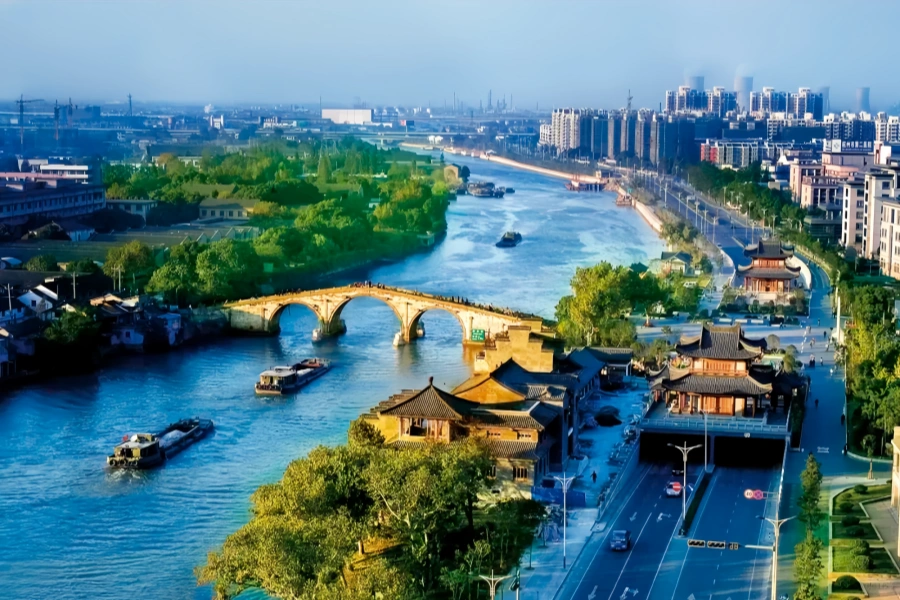
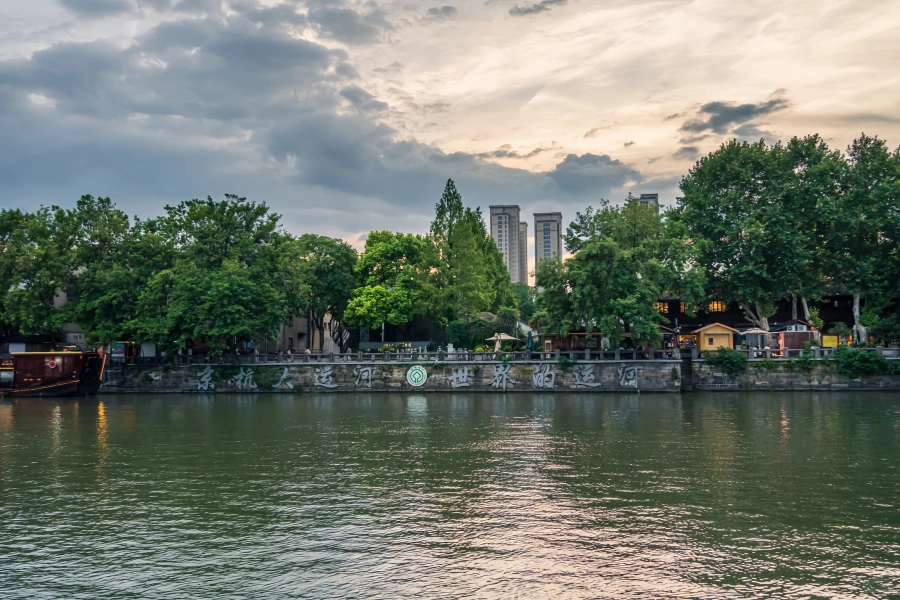
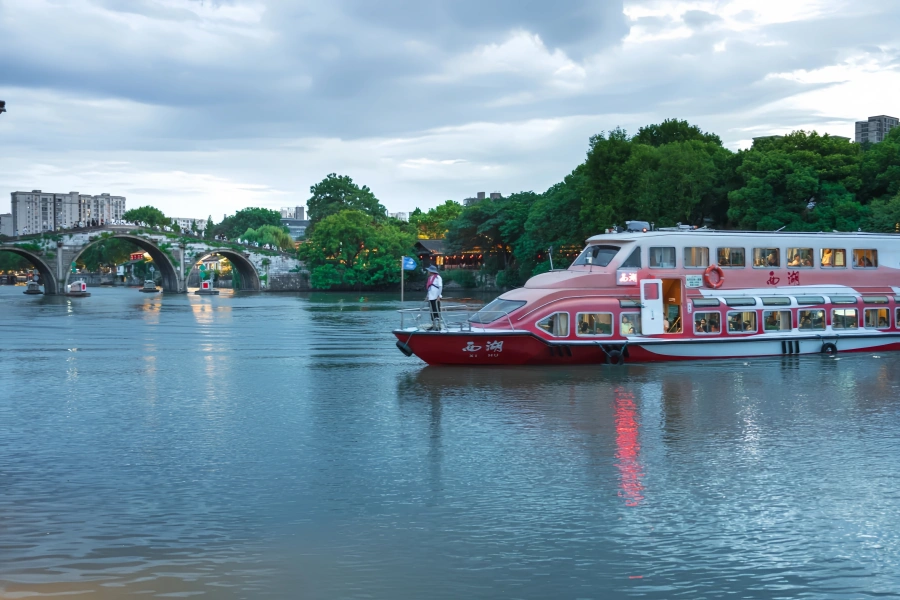
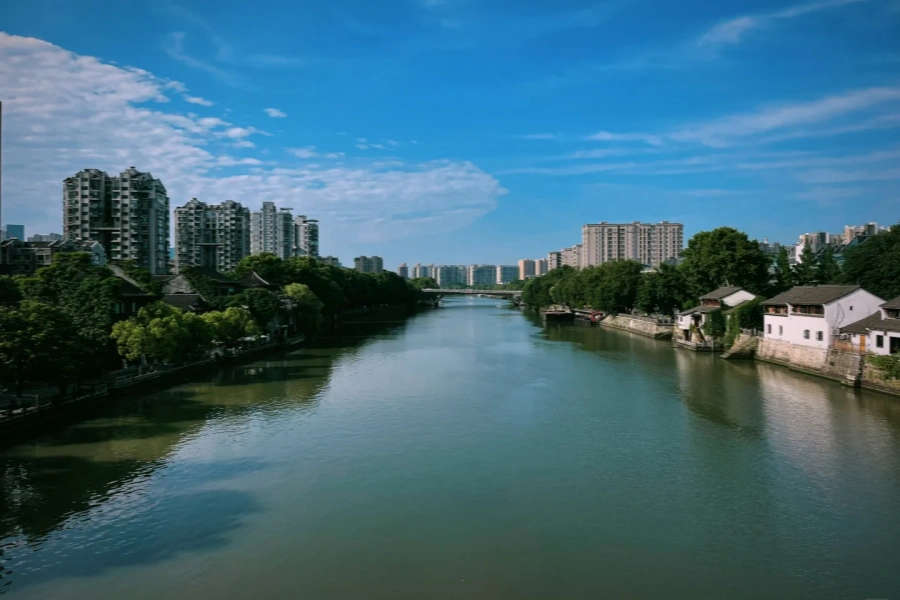
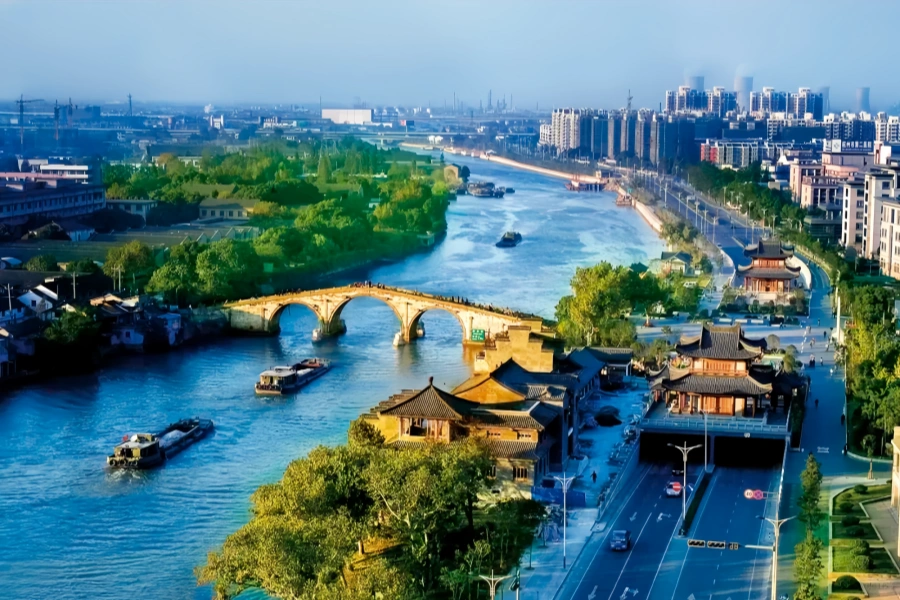
The imagery of the final destination: Standing atop Gongchen Bridge and looking north, the Grand Canal of China converges here, flowing majestically northward. This is the logical end point of the thousand-mile-long canal transport, its waters carrying millennia of grain, goods, stories, and nostalgia. Observing the passing vessels, one sees both traditional cargo ships and sightseeing boats, where ancient and modern transportation converge.
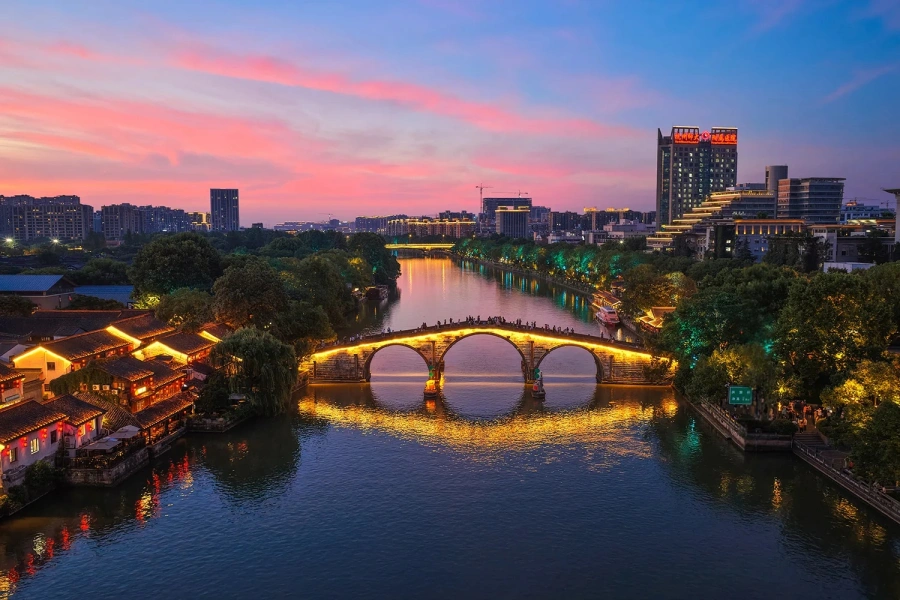
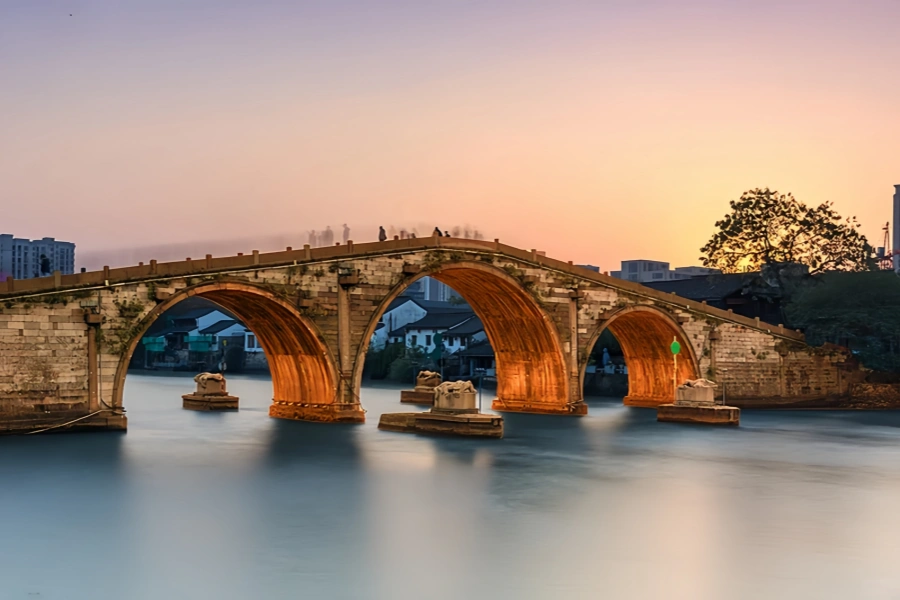
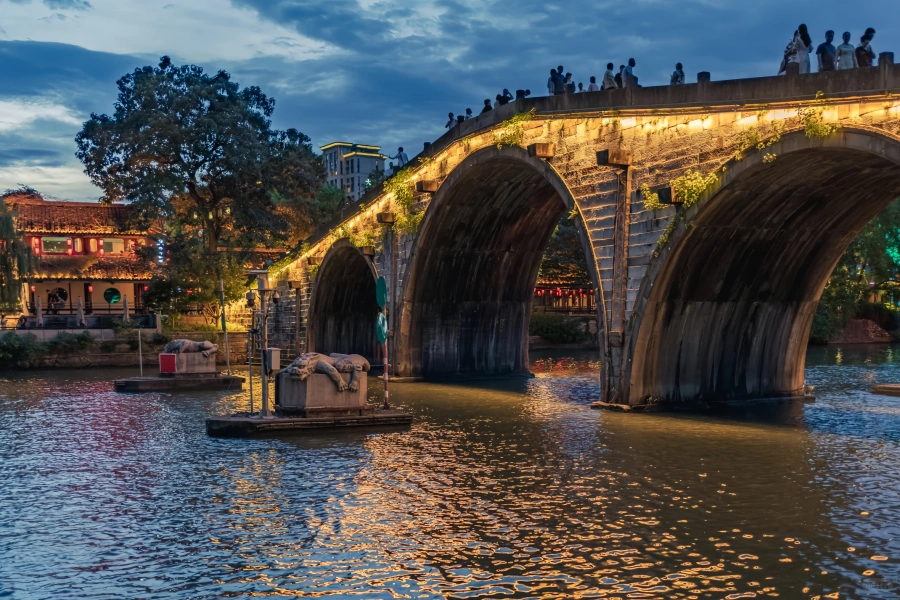
Light and shadow at dawn and dusk: In the early morning, a thin mist shrouds the river, and the sunrise outlines the ancient bridge in gold; in the evening, as the sun sets, the canal water is dyed a warm gold, and returning boats cut through the shimmering waves. At night, the lights on both banks and the bridge itself illuminate the scene, reflecting in the inky black water, creating a tranquil yet dazzling night view of the canal.
The Grace of Ancient Bridges: A Stone Poem of Strength and Beauty
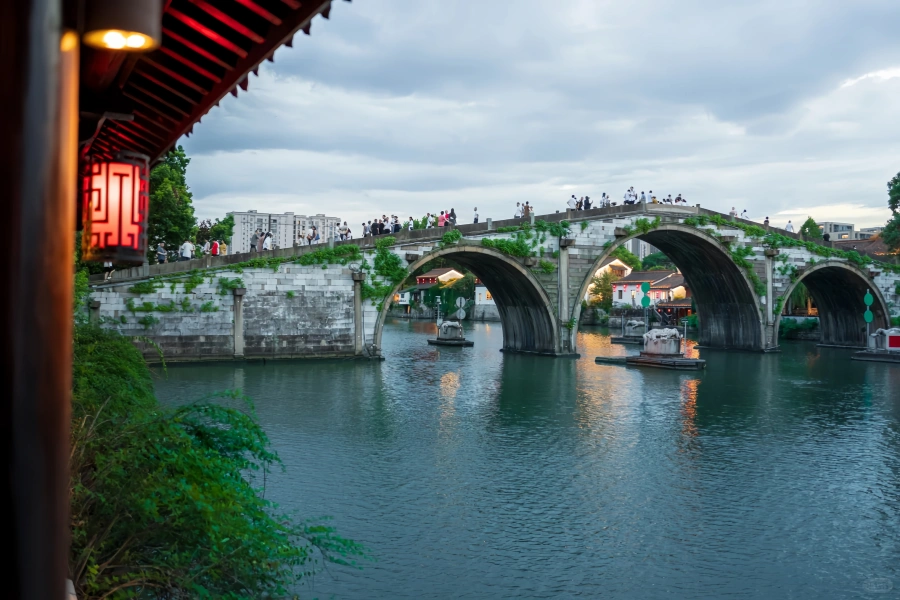
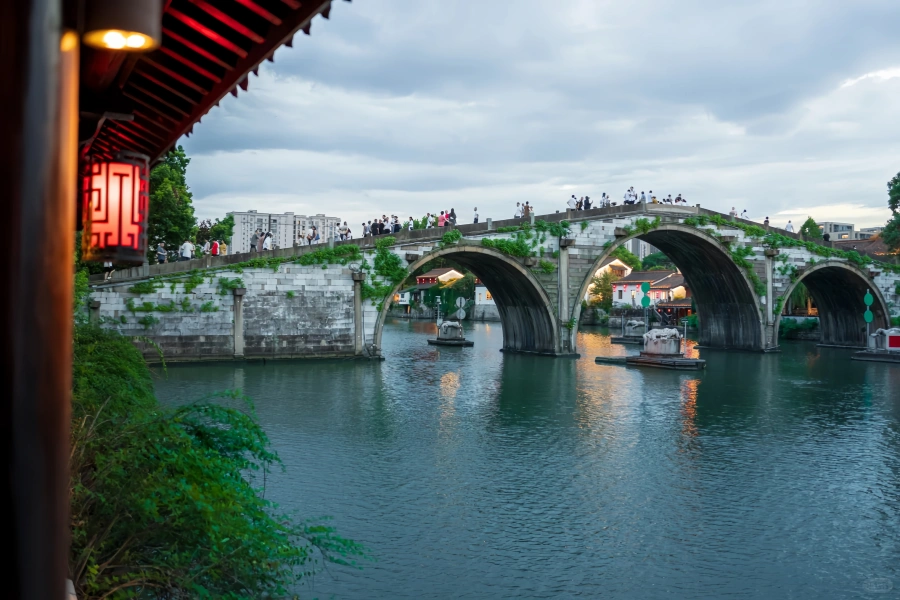
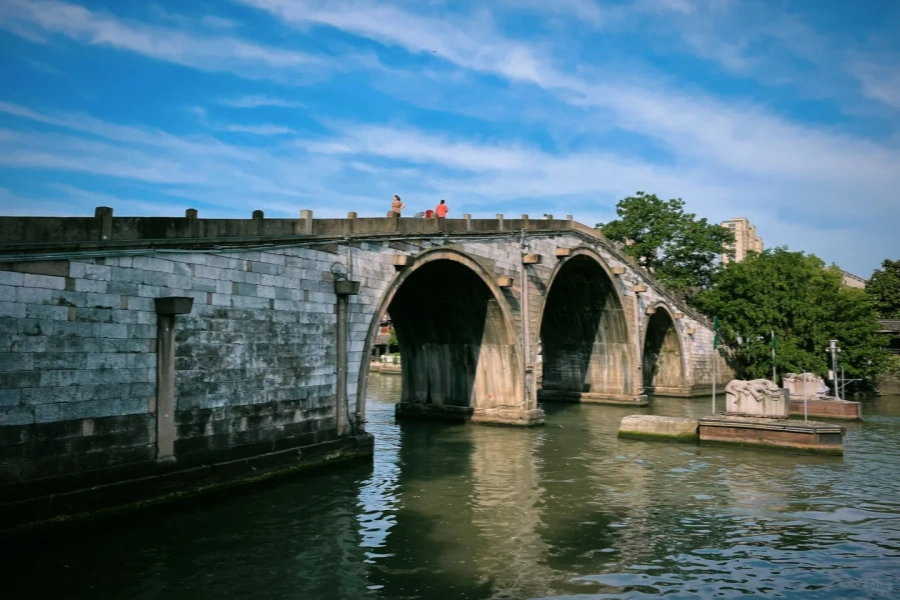
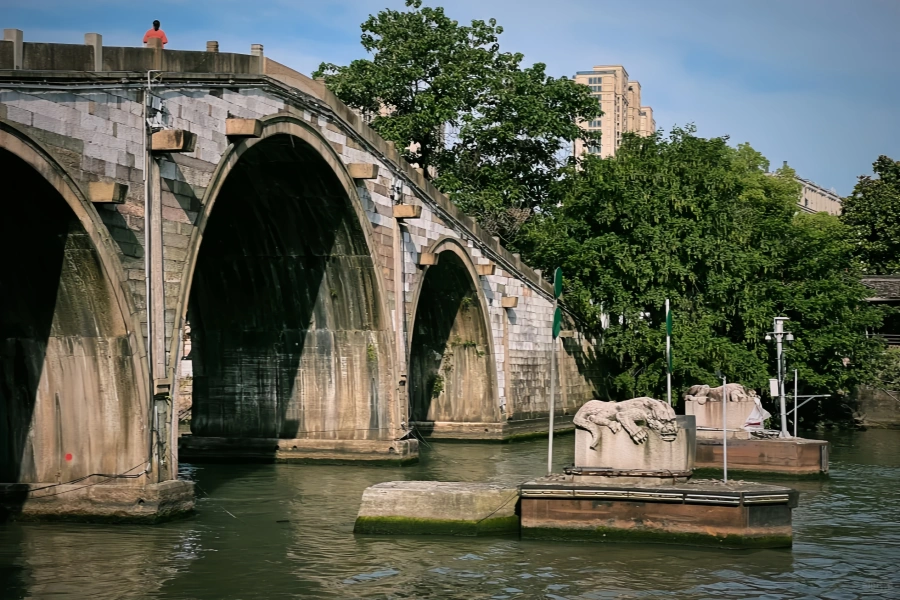
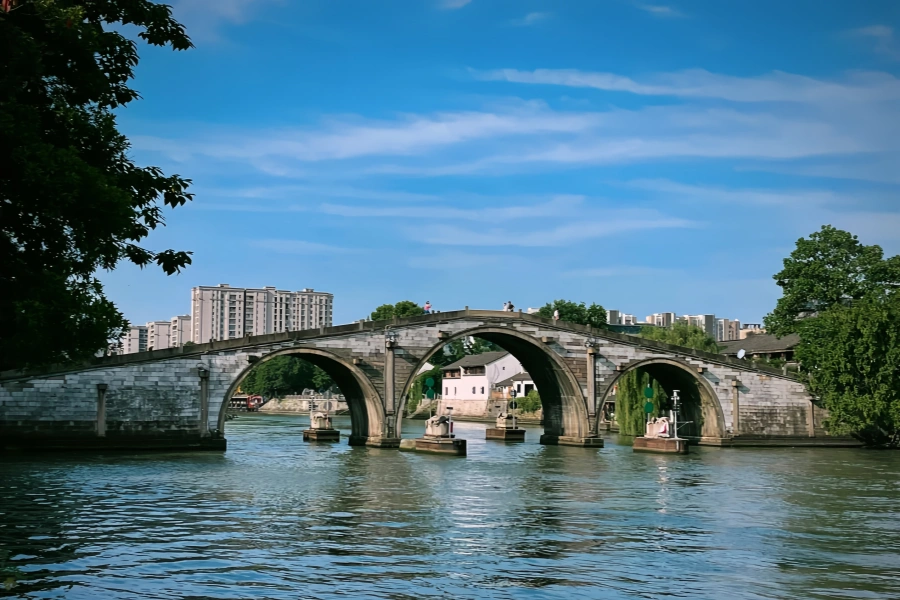
Structure and Proportion: As the tallest and longest existing stone arch bridge in Hangzhou, its three arches are of different sizes, with the central arch reaching a height of 16 meters to facilitate the passage of large ships. The bridge is constructed with wooden pile foundations and stone blocks, giving it a tall, heavy, and magnificent appearance.
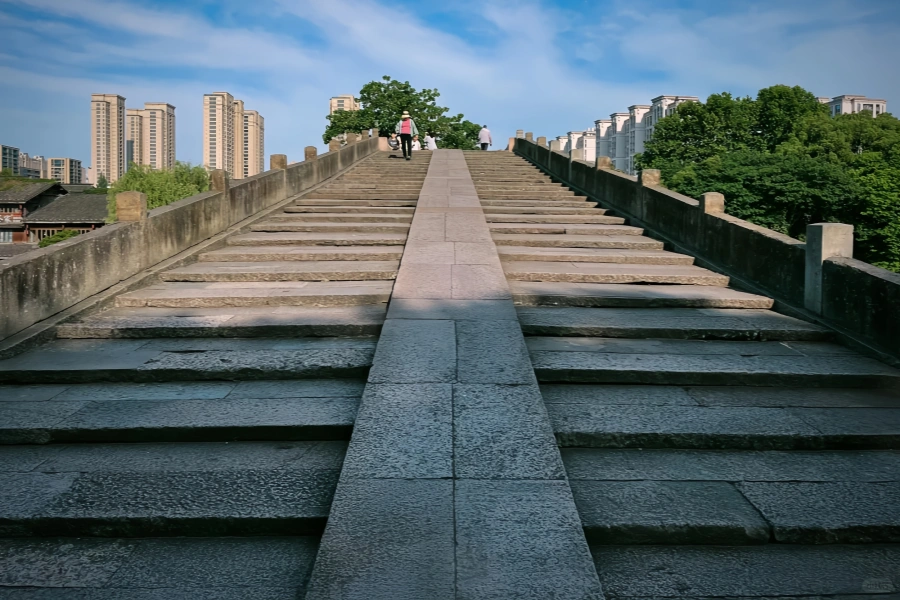
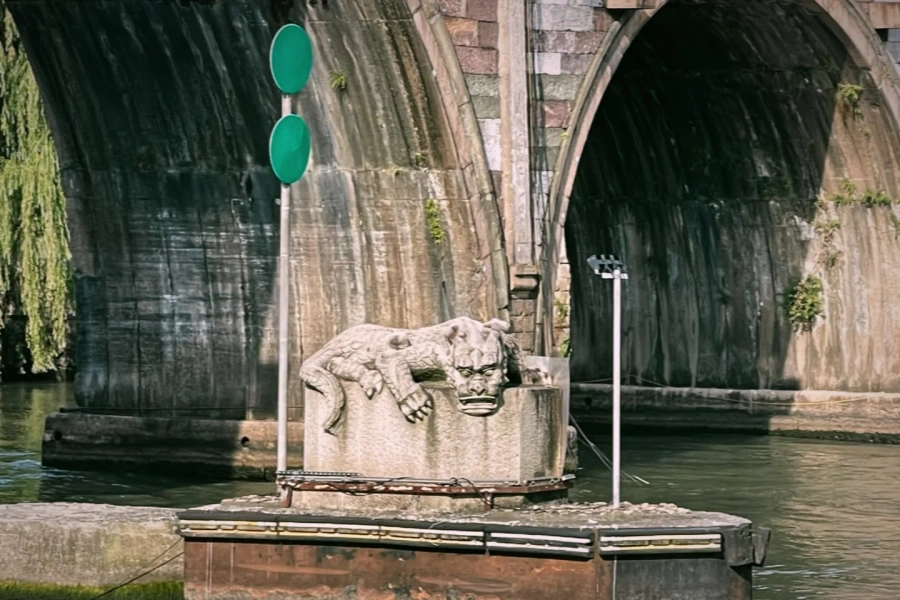
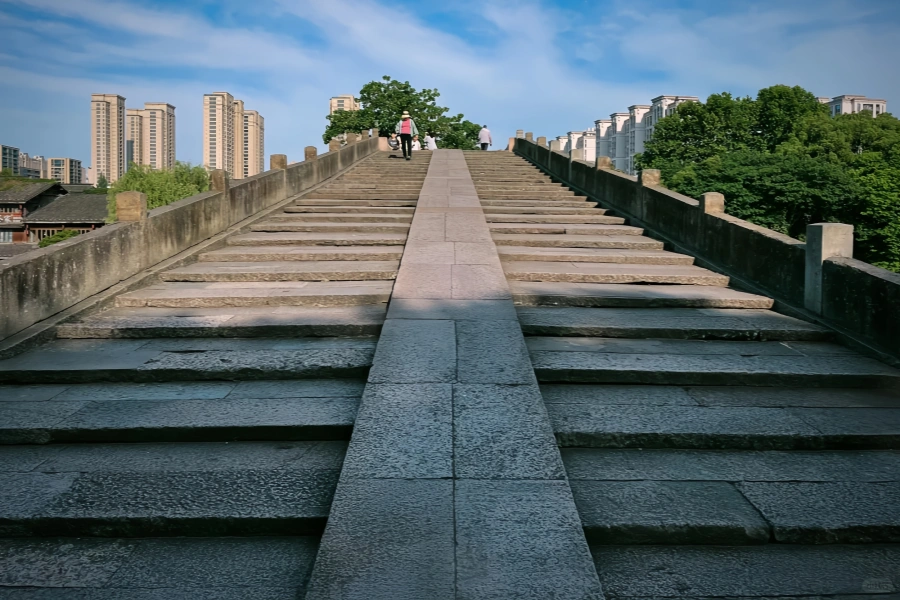
Bridge Surface and Details: The long bridge surface consists of steps and platforms, the steps worn smooth by time. The balustrades are adorned with stone lions of various shapes, some damaged but still retaining their spirit. Walking on it, one can feel the weight of history with every step.
Humanistic Ingenuity – A Living History Museum
The bridge itself is a cultural relic, while both ends of the bridge are open-air museums.
Qiaoxi Historical and Cultural District: This is the "life foundation" of Gongchen Bridge. The district has completely preserved the lane buildings, traditional shops, courtyard-style residences, and industrial plants from the late Qing Dynasty and early Republic of China. It has not been overly commercialized and is still home to a large number of original residents. Barbershops, grocery stores, and teahouses are interspersed among the buildings, creating a genuine and palpable atmosphere of everyday life.
"A cluster of museums without walls": Centered on Gongchen Bridge, several national-level museums are gathered within walking distance.
The China Grand Canal Museum: It systematically explains the history and culture of the canal, making it an excellent source of knowledge before your visit.
The China Knife, Scissors and Sword Museum, the China Fan Museum, and the China Umbrella Museum are all converted from old factory buildings. They not only showcase exquisite craftsmanship, but their architecture itself is also a model of industrial heritage preservation.
Hangzhou Arts and Crafts Museum: Dynamically displays various intangible cultural heritage crafts, often featuring live demonstrations by master craftsmen.
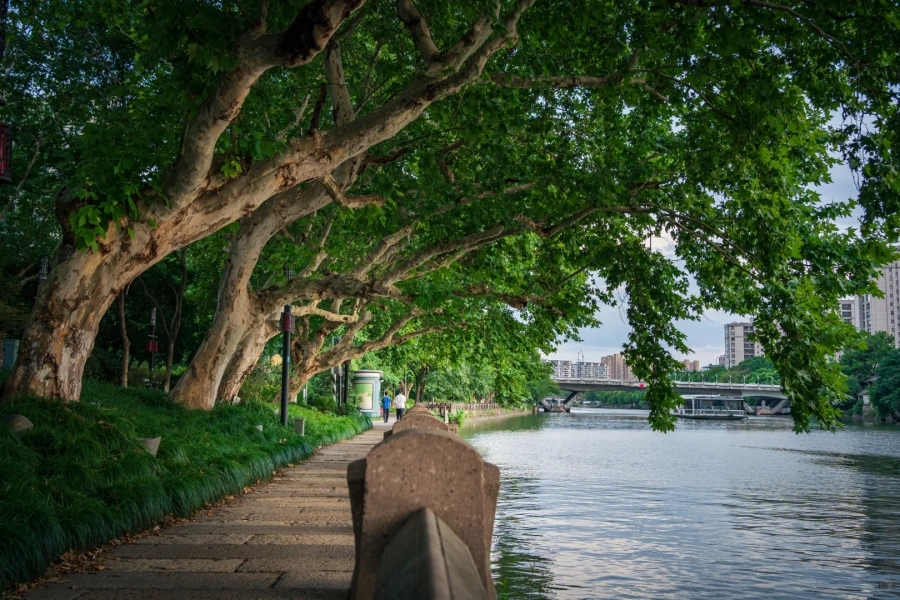
The dock and ancient towpath: The ruins of the imperial dock at the eastern end of the bridge were once a place for receiving emperors. The ancient towpath stone banks preserved along the river make one seem to see the hunched figures of the boatmen in the past.
Photography Tips:
The classic panoramic shooting position is on the opposite bank of the canal (east bank), which can capture the three arches of Gongchen Bridge and their reflection in the water in the whole picture, and is especially suitable for sunrise, blue hour and night scene shooting.
Humanistic documentary: The alleys of Qiaoxi Street, the elderly drinking tea by the river, and the unique architectural structure of the museum are all excellent subjects.
Close-up details: Focusing on the stone lions on the bridge railings, the steps worn by time, and the mottled bridge inscription stones, telling the story of time.
Dynamic composition: waiting for a barge or cargo ship to pass under the bridge to bring life to the static scene.
Drone Notice: This area is within the Hangzhou airspace and urban airspace control zone. Drones are strictly prohibited from flying without authorization.