Nature's Creation—Frozen Legends and Geological Epics
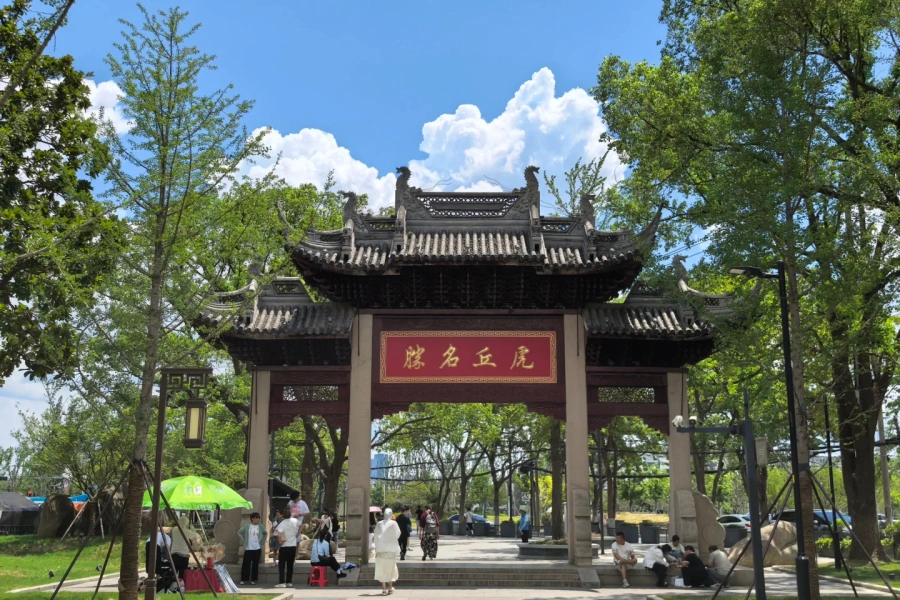
The natural landscape of Tiger Hill is imbued with stories and traces of time in every stone.
Sword Pool: An Eternal Mystery Beneath the Cliff
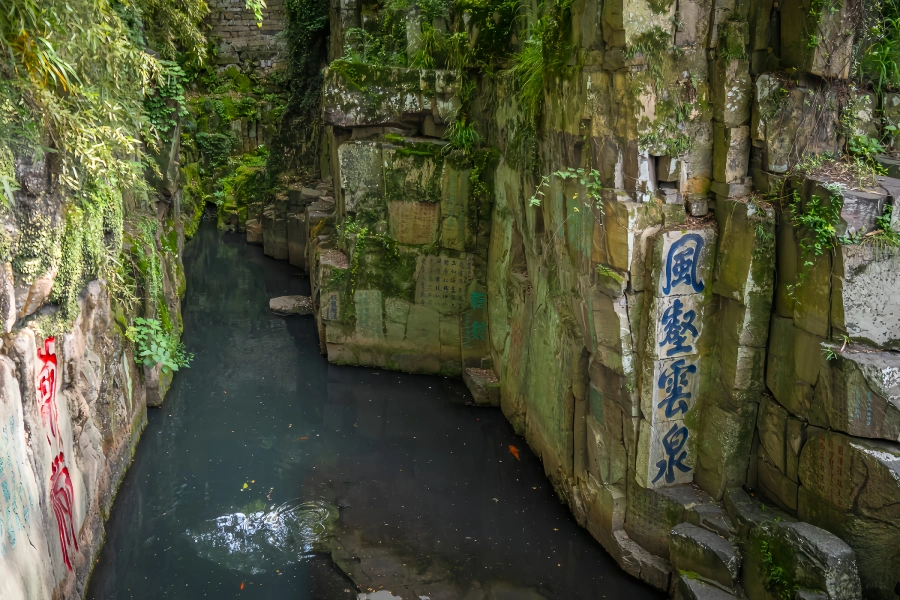
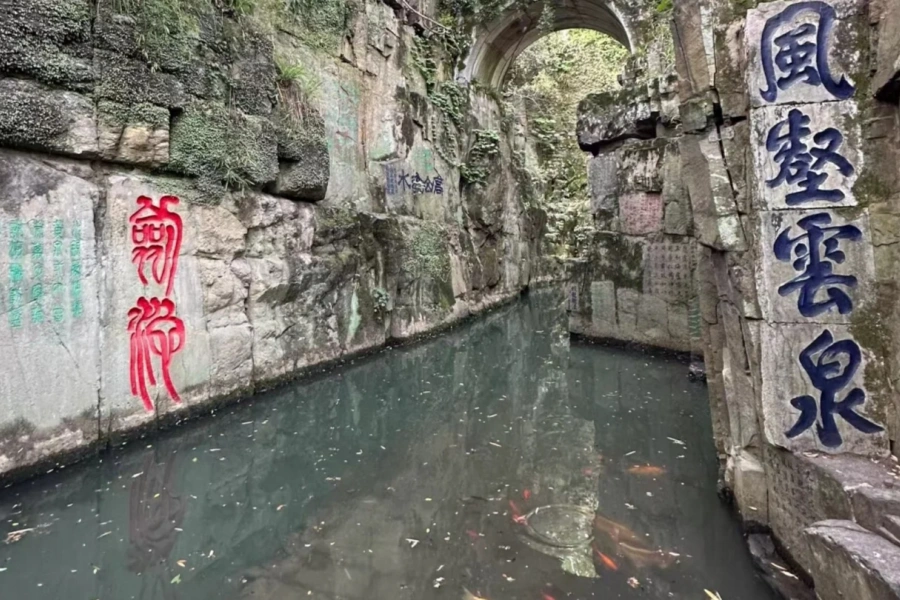
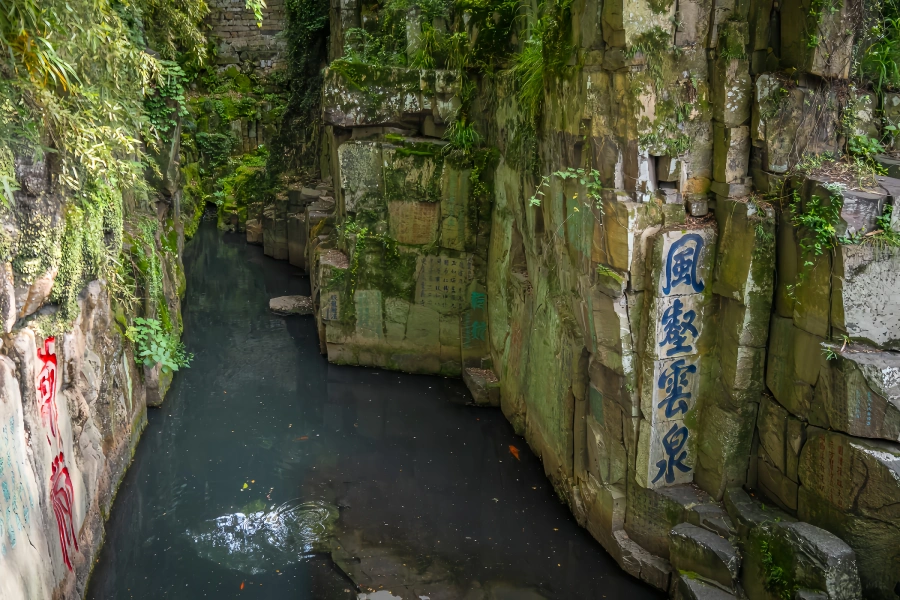
This is the most mysterious and profound core of Tiger Hill. A pool of clear water is surrounded by steep, sheer cliffs on both sides, resembling a long sword. The cliffs are inscribed with calligraphy by famous calligraphers throughout history, among which the two characters "Sword Pool" are said to be written by Wang Xizhi. The pool is dark and murky, and it is said that the entrance to the tomb of King Helü of Wu lies beneath it. According to the *Yue Jue Shu*, both Qin Shi Huang and Sun Quan of Eastern Wu attempted to excavate the pool to find the sword, but both failed. In 1955, the pool was drained and silted up, revealing a "人"-shaped tunnel at the northern end of the pool, sealed by three huge stones. This provided further evidence for the legend of the tomb entrance, but due to concerns about endangering the ancient pagoda on the hilltop, it was not excavated, thus preserving this age-old mystery.
Thousand-Man Stone and White Lotus Pond: Master Sheng preaches, and the stubborn stones nod in agreement.
The Thousand-Man Stone is a huge, flat, reddish-brown boulder, barren of any vegetation. Legend has it that after King Helü was buried, King Fuchai killed over a thousand tomb-building craftsmen on this stone to silence them, their blood soaking into the surface and remaining there for a long time. Another, more Zen-like legend tells of the Eastern Jin Dynasty monk Zhu Daosheng, who preached here to a thousand listeners, even the stubborn stones beside him nodding in agreement. The idiom "Master Sheng preaches, the stubborn stones nod" originates from this story. A "Nodding Stone" in the nearby White Lotus Pond serves as a testament to that Buddhist connection.
The Third Spring and the Hanhan Spring: Flowing Clarity and Ingenuity
The Third Spring (Lu Yu Well) is named after Lu Yu, the Tea Sage, who praised it as "the third best in the world." Its water is crystal clear. The Hanhan Spring, according to legend, was unearthed by a blind monk named "Hanhan" who tapped the ground with his cane, sensing the earth's energy. From then on, the spring flowed continuously, curing his eye ailment. Both springs still flow today, symbolizing nature's bounty and the spirit of perseverance.
Humanistic craftsmanship – a leaning monument and exquisite gardens
The buildings and ruins here are masterpieces of human wisdom in the face of time.
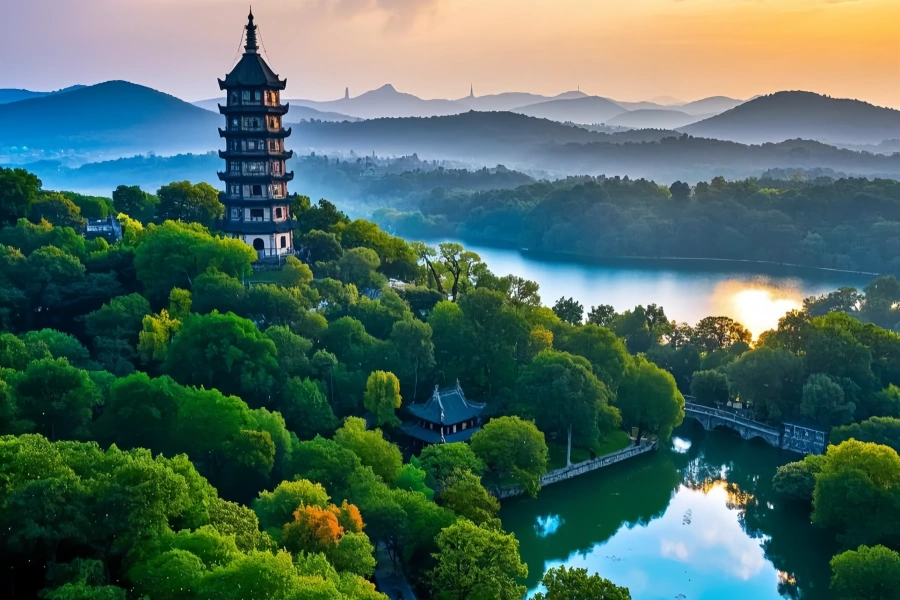
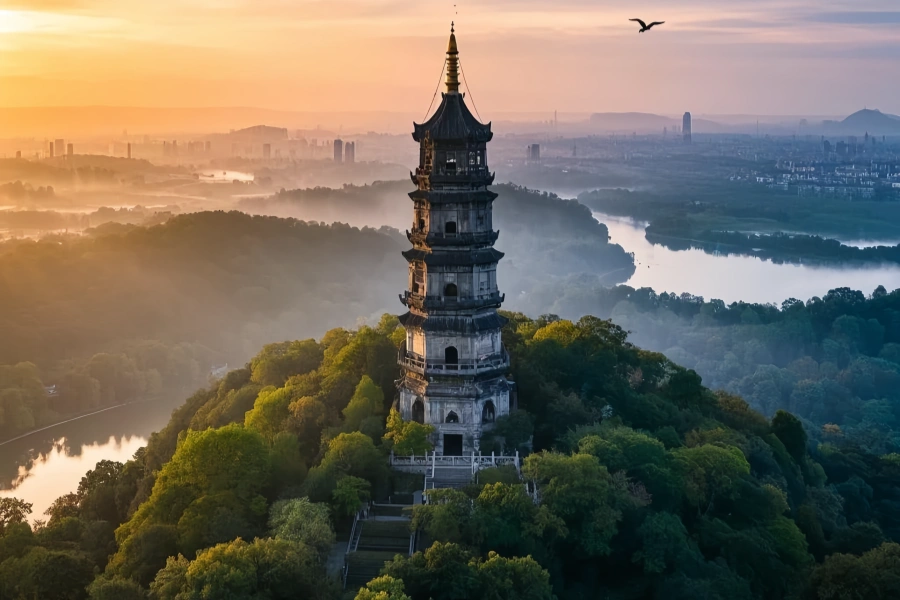
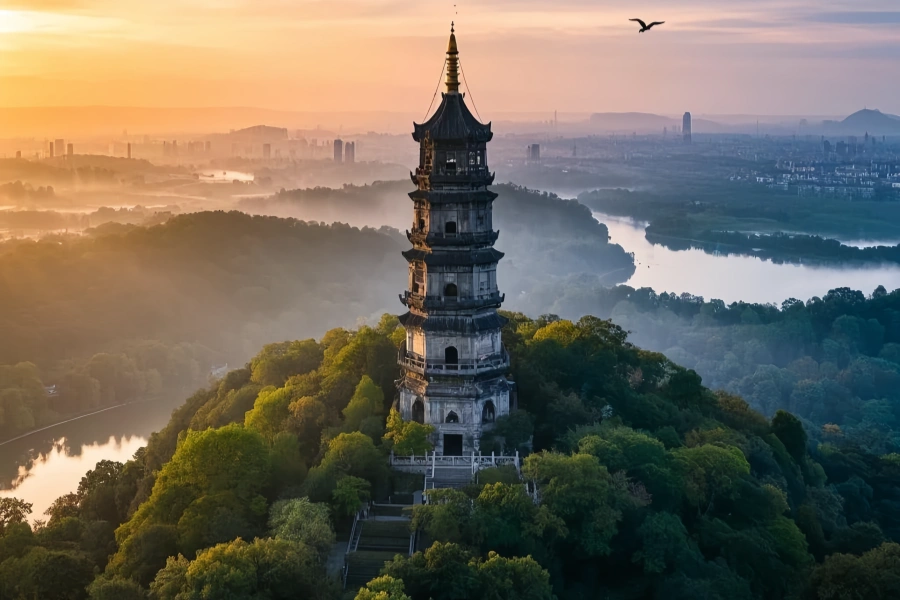
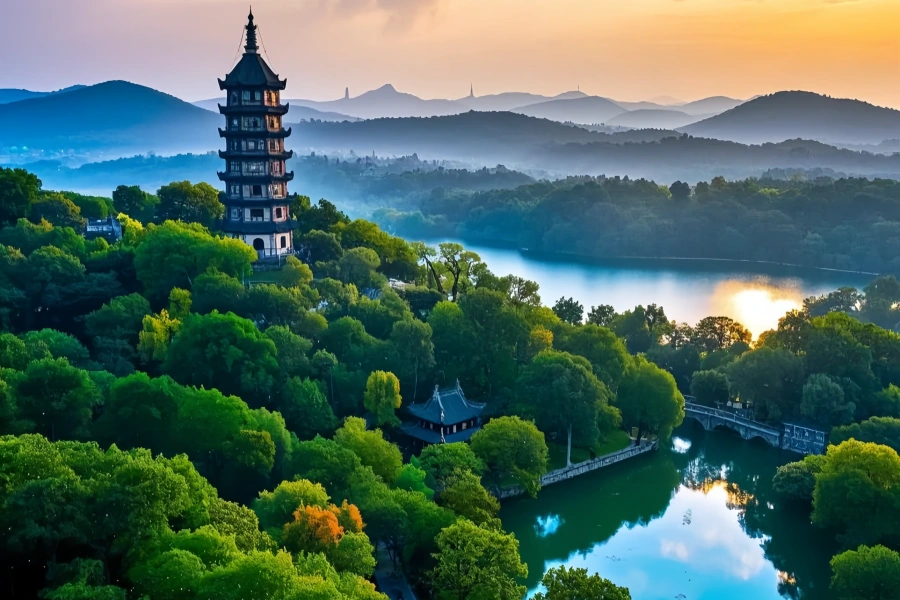
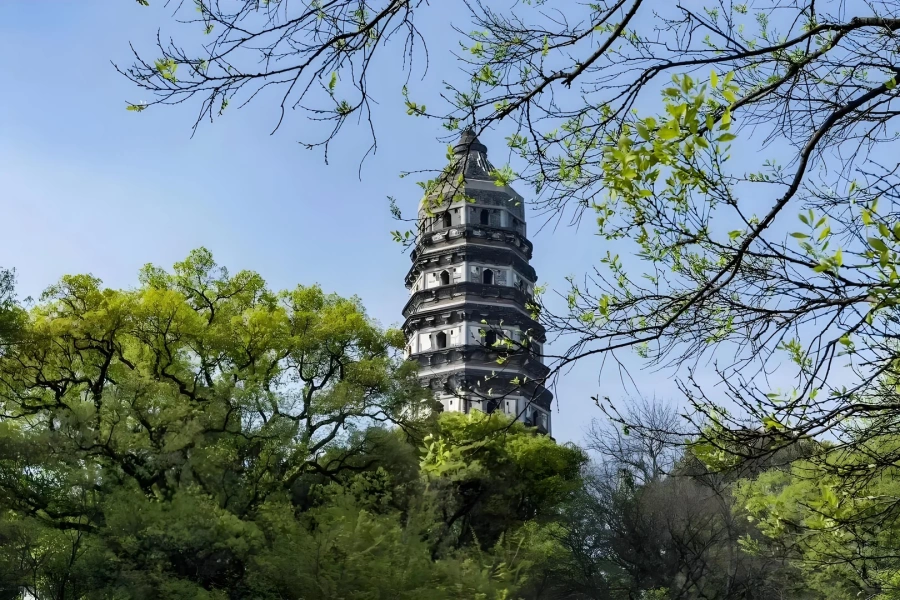
Yunyan Temple Pagoda (Tiger Hill Pagoda): A thousand-year-old leaning tower, a symbol of the city.
This octagonal, seven-story brick pagoda has been an absolute landmark of Suzhou's ancient city since its construction. It is not only the oldest, largest, and most exquisitely structured Buddhist pagoda still standing in Jiangnan, but it is also world-renowned for its unique "leaning yet not collapsing" posture. Due to uneven settlement of the foundation, the pagoda leans northeastward, with a maximum tilt angle of approximately 3 degrees and 59 minutes, and the center of the top is 2.34 meters away from the center of the base. Having withstood a thousand years of wind and rain, war, and even fire, it still stands majestically, a true miracle in the history of ancient Chinese architecture and a must-see for every visitor.
Tiger Hill Sword Pool: An Open-Air Museum of Cliffside Carvings
The cliff face of Jianchi (Sword Pool) is covered with numerous inscriptions dating from the Song to the Qing dynasties. Besides the two large characters "Jianchi," there are also inscriptions such as "Fenghe Yunquan" (attributed to Mi Fu) and "Third Spring." These authentic calligraphic works, combined with the secluded environment, create a sense of historical vicissitude and artistic atmosphere.
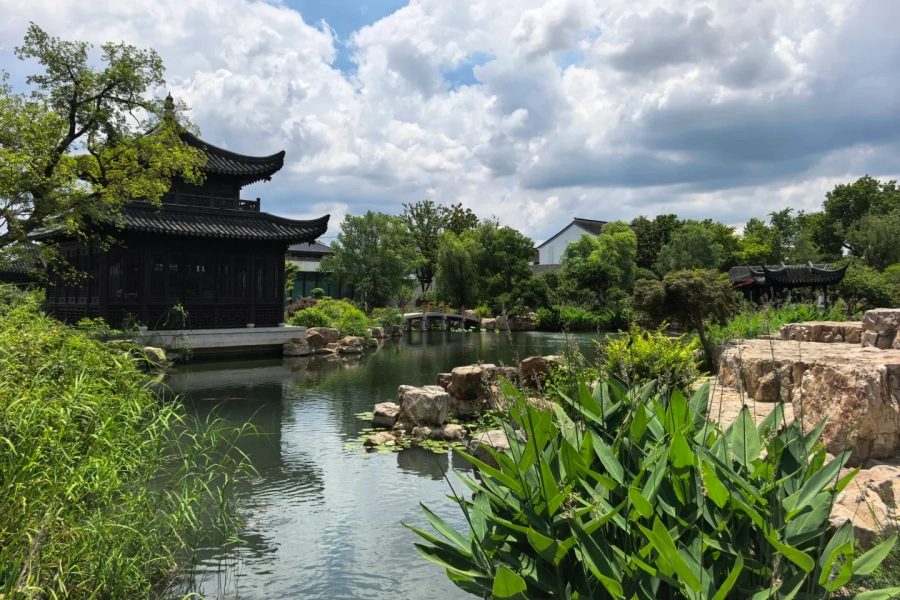
Gardens and Architecture: The Elegant Charm of Wu Region Within Reach
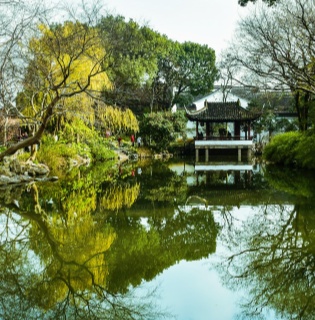
- Yongcui Villa: Built in the Qing Dynasty, it is a small terraced garden built on the mountain. It cleverly utilizes the natural slope of Tiger Hill to form a layered landscape, which reflects the high level of Suzhou gardens' "adapting to local conditions".
- Wanjing Villa (Bonsai Garden): It brings together the essence of Suzhou-style bonsai, condensing the artistic conception of mountains, rivers and ancient trees into a small pot, making it the best place to appreciate the art of Suzhou bonsai.
- Broken Beam Hall (Second Mountain Gate): Originally built in the Tang Dynasty, the existing structure is a remnant from the Yuan Dynasty. Its main beam is made of two sections of round wood spliced together, hence the name "Broken Beam". It cleverly utilizes the principles of mechanics and is a vivid manifestation of the wisdom of ancient architecture.
Photography Tips:
The classic Leaning Tower of Pagoda photo spot is on the platform in front of the "Wind, Ravine, Cloud, and Spring" stone carving at Sword Pool. With a telephoto lens, you can capture both the ancient tower and the depth of Sword Pool below, creating an excellent composition.
The humanistic atmosphere can be captured by taking photos on the Thousand People Stone in the early morning or before the park closes, using low-angle lighting to express the texture of the stone surface and the sense of historical vastness.
Don't miss the moon gate and flower windows at Yongcui Villa, which are excellent spots for framing photos.