Nature’s Handiwork—A Vertical Masterpiece of Mountain City Topography
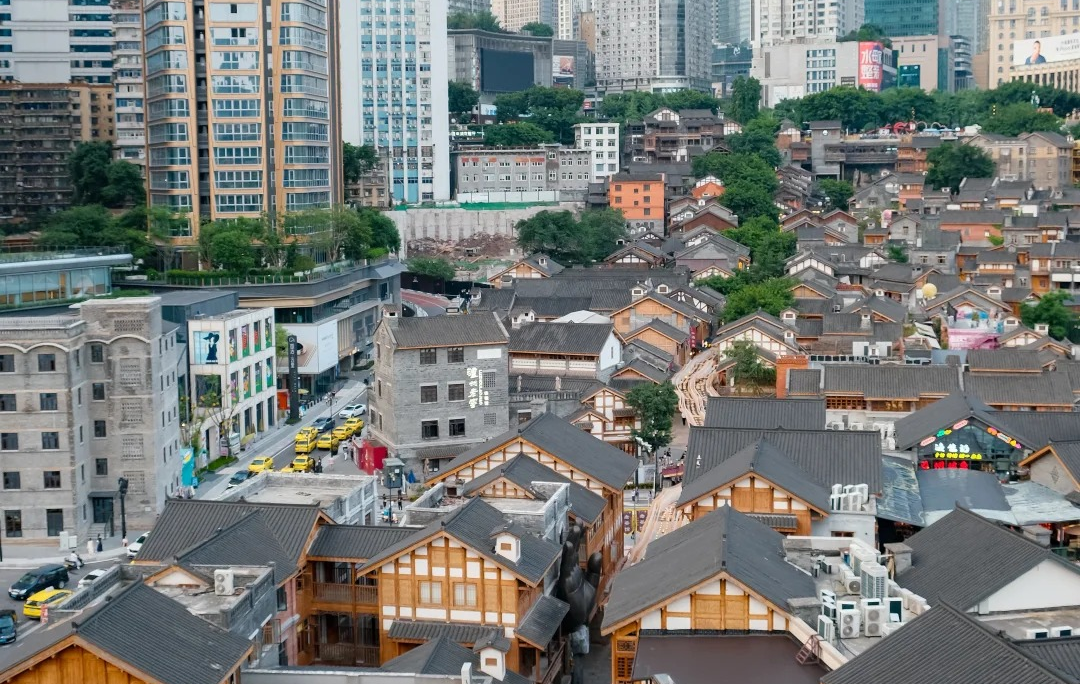
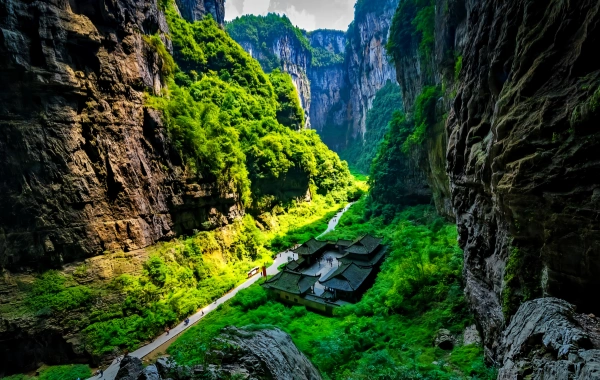
The allure of Shibati (Eighteen Steps) stems first and foremost from its extreme topographical features. The ridge of the Yuzhong Peninsula rises sharply, creating an elevation difference of several tens of meters between the "Upper City" and the "Lower City"; Shibati serves as the most vivid transition zone bridging this vertical gap.
Seven Streets, Six Alleys—Steps as the Backbone
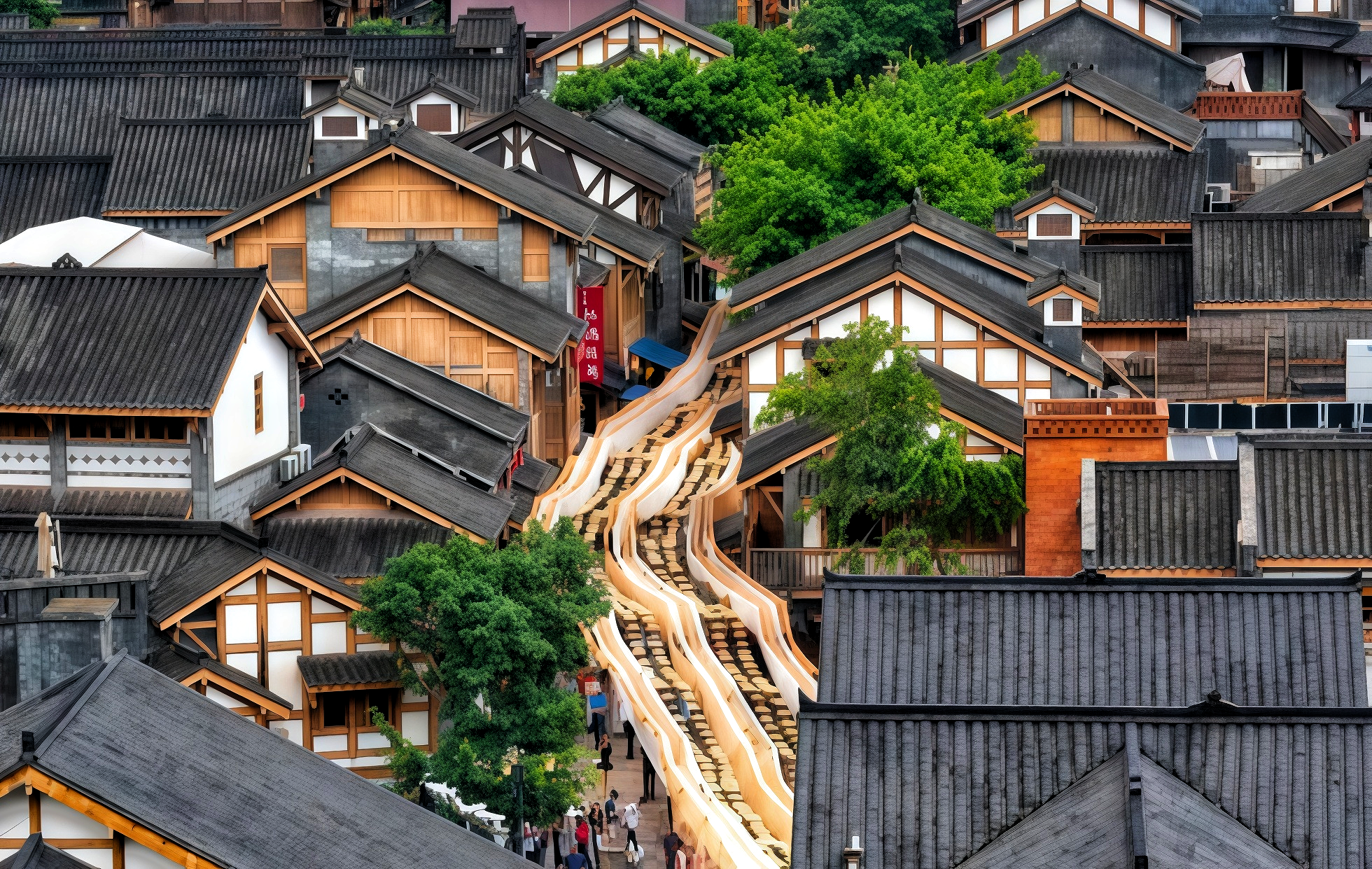
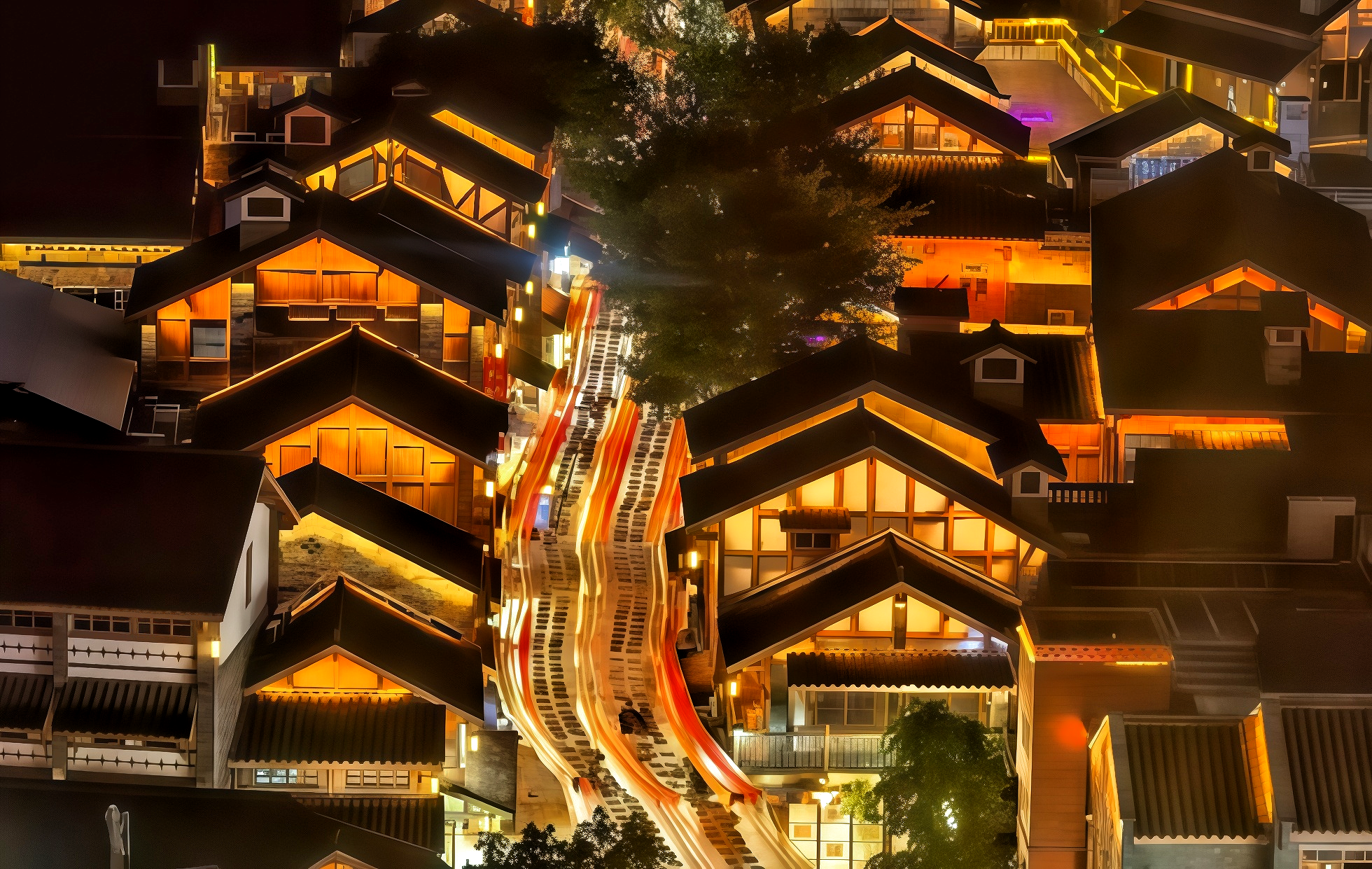
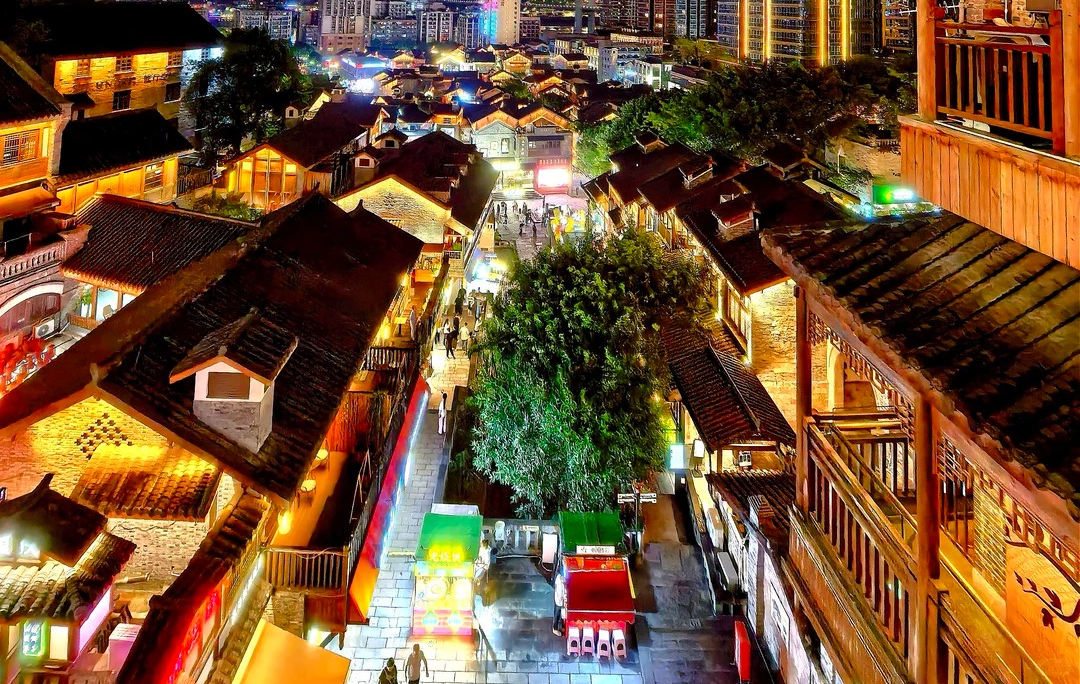
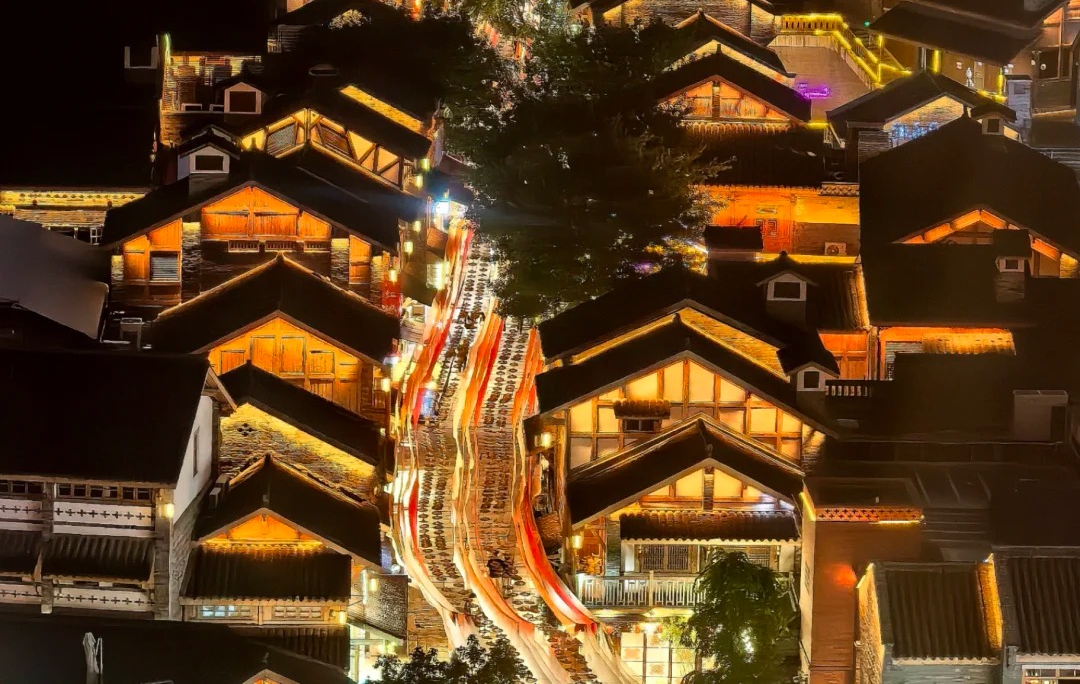
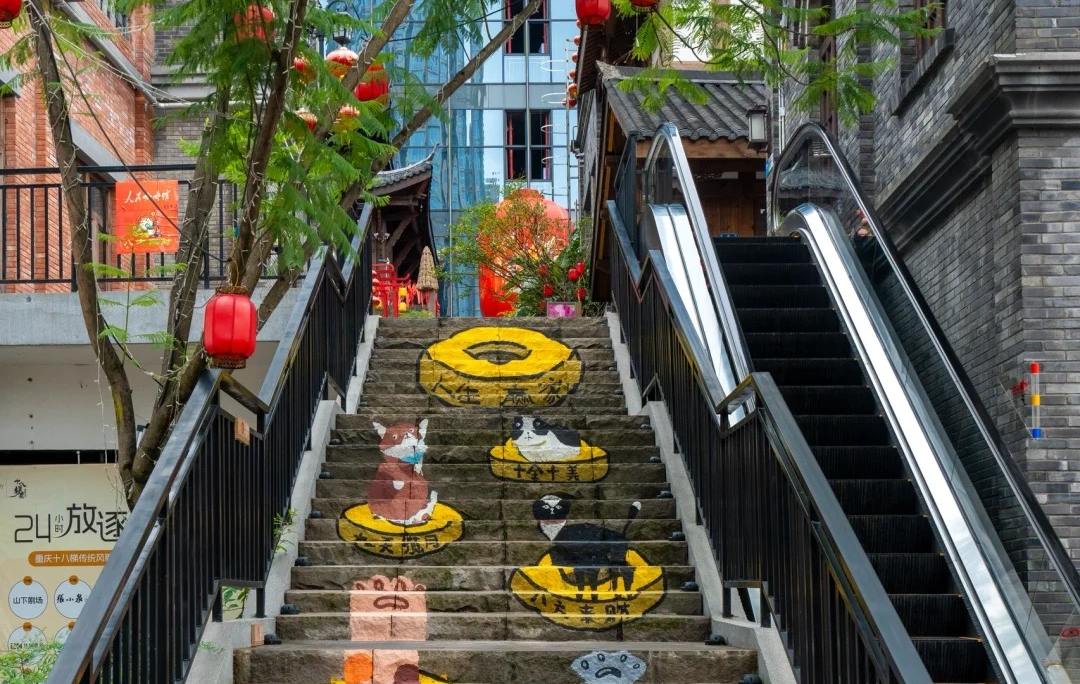
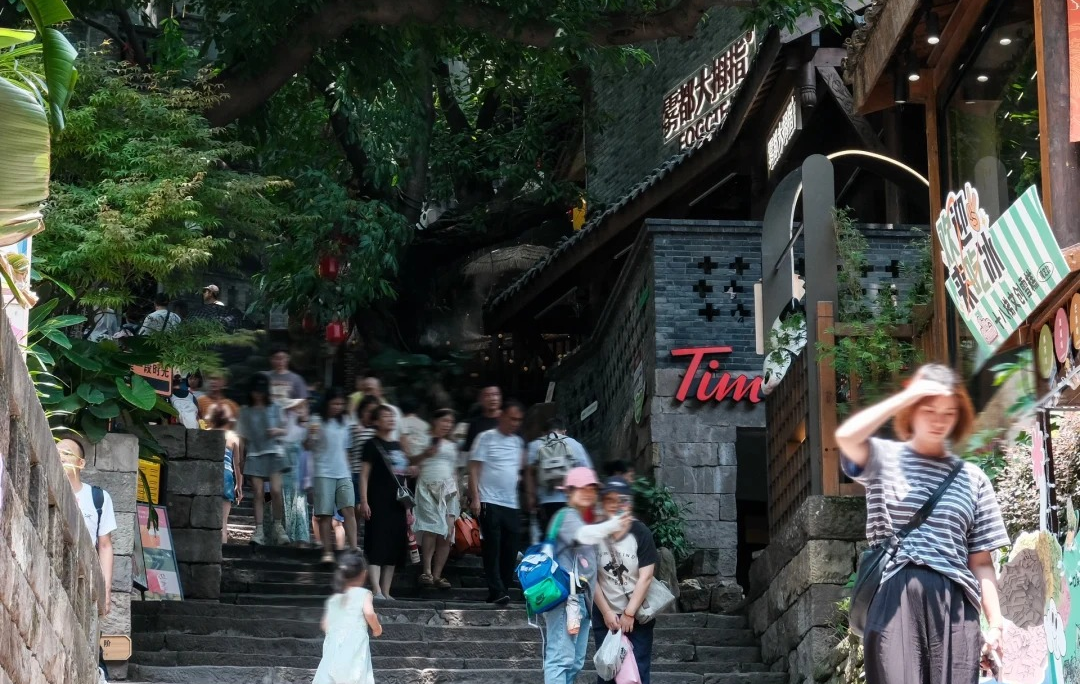
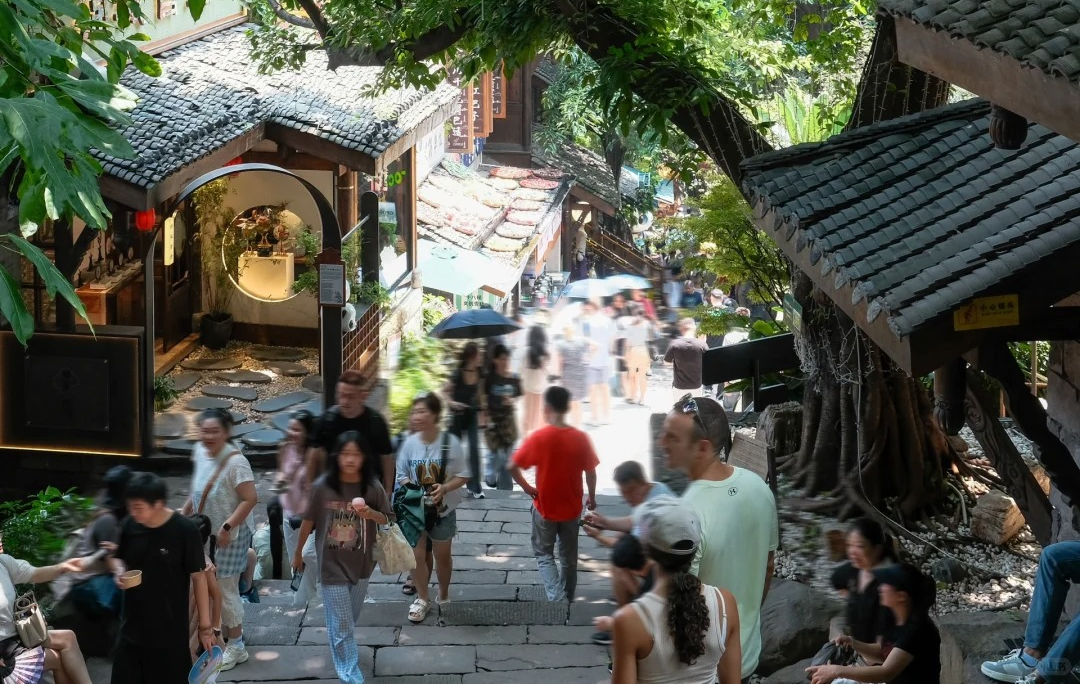
The skeletal structure of Shibati is woven from a network of 13 traditional thoroughfares—comprising "seven streets and six alleys"—forming an overall "fishbone" pattern with a texture as intricate as a spiderweb. The central main staircase spans approximately 190 stone steps in length, stretching from the Jiaochaangkou Viewing Plaza in the north down to Jiefang West Road in the south, winding its way along a vertical drop of several hundred meters. Stepping onto the staircase, one finds the original retaining walls, cliff faces, and ancient Huangge (banyan) trees preserved on both sides—a total of three historical buildings, 81 large and ancient trees, and old air-raid shelters have been meticulously retained in their original state. As you descend the steps, the skyscrapers of the Upper City loom overhead while the blue-tiled rooftops of the Lower City lie beneath your feet; this magical sensation of "spanning a century in a single step" constitutes the unique and unparalleled charm of Chongqing—the Mountain City.
"Huangge Hanging Moon"—Ancient Trees as the Soul
Shibati has preserved 81 large and ancient trees, the most iconic of which are the Huangge trees scattered along the sides of the steps. With their varied forms, the roots of these Huangge trees are deeply embedded within the stone crevices and retaining walls; having weathered decades—or even centuries—of wind and rain, they grow in twisted, gnarled shapes amidst the dense cluster of houses and narrow alleys, serving as a living symbol of Shibati’s enduring vitality. Yuetaiba (also known as "Yuebatai") stands as the premier spot for sightseeing and moon-gazing; when the bright moon hangs high in the sky, the shadows of the Huangge trees are cast upon the stone steps and blue-tiled roofs—this poetic scene is the very origin of "Huangge Hanging Moon," one of the traditional "Eighteen Scenic Views" of the area.
Sunset over the Buddha Cliff: The Urban Balcony
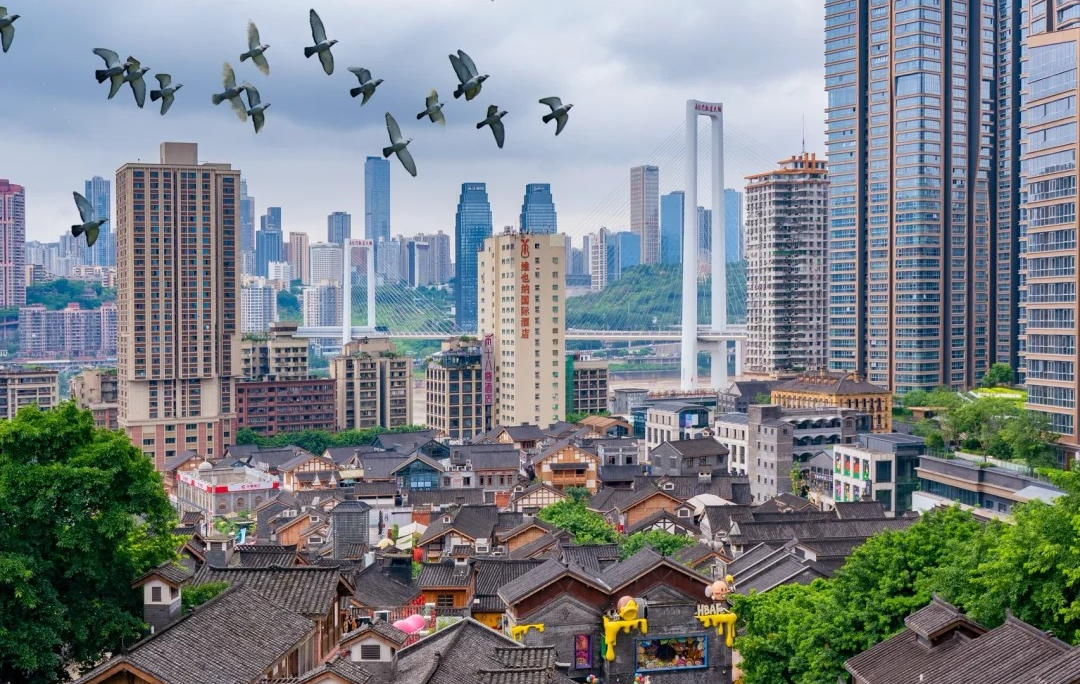
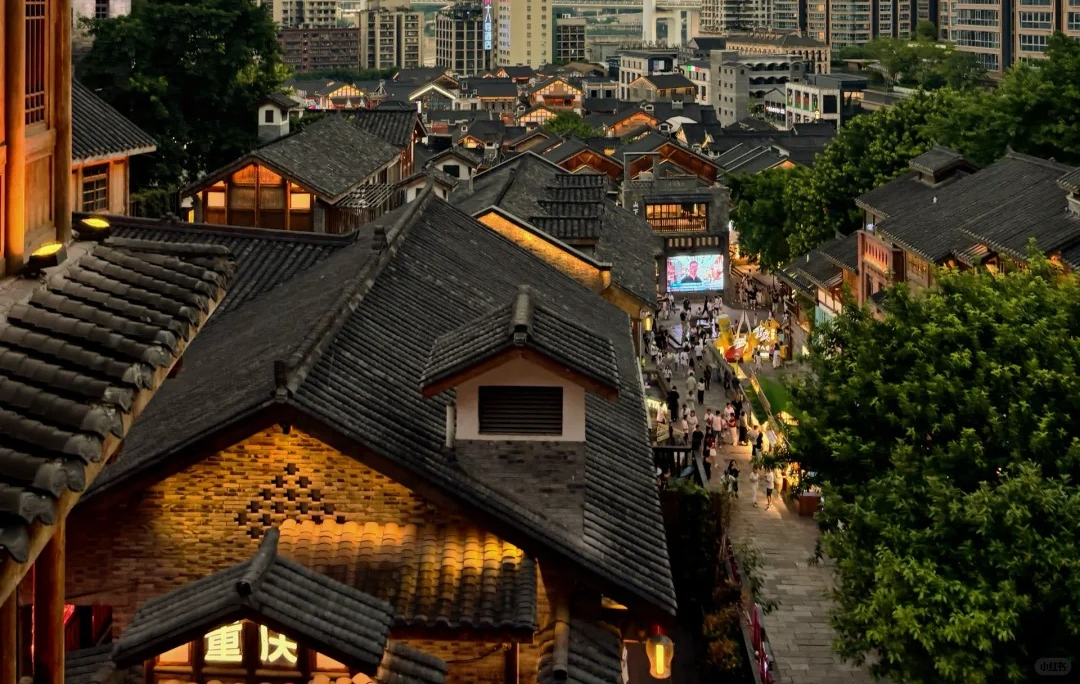
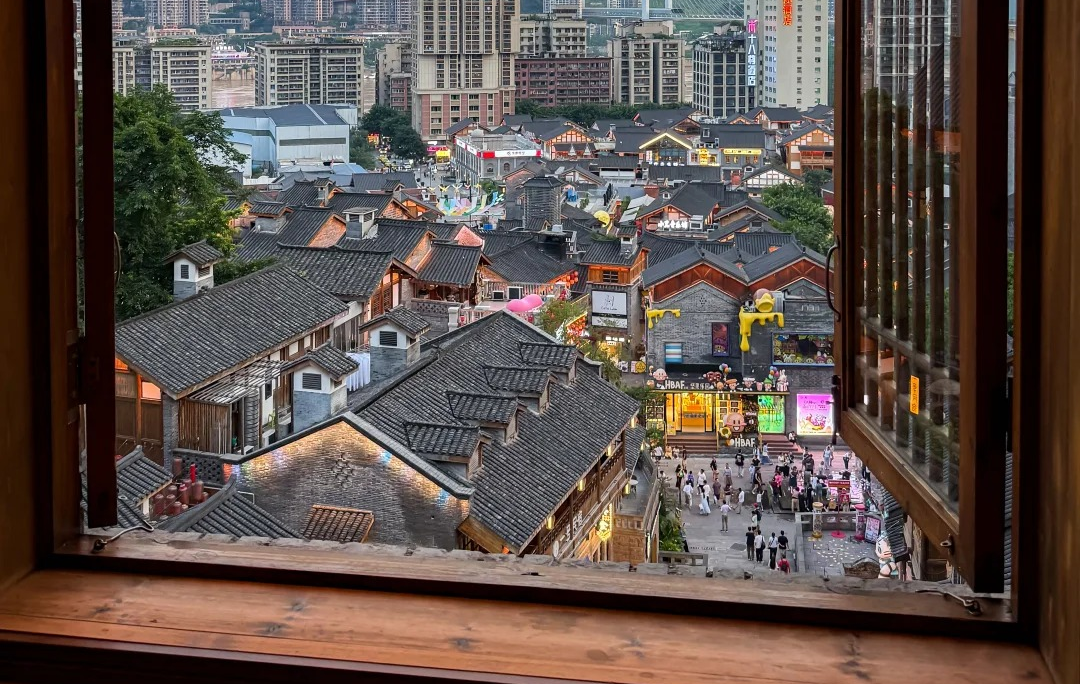
To the west of Shibati lies a preserved natural rock face known as Guanyin Cliff. Inscriptions from various historical eras remain etched into the cliffside to this day; as the sun sets in the west, its golden afterglow bathes the rock face, causing the ancient carvings to emerge from the interplay of light and shadow—a scene aptly named "Sunset over the Buddha Cliff." From the "Urban Balcony" (also known as the "Jiaochang Vista") located at the northern entrance, one can look down to see the entirety of Shibati unfolding beneath one's feet like a three-dimensional scroll depicting life in this mountain city. Photography Tip: The Urban Balcony offers the best vantage point for capturing panoramic views of Shibati, particularly when framing it alongside the WFC (World Financial Center) tower at Jiefangbei—a shot best attempted at sunset.
Sounds of the Hidden Realm: Flowing Water and City Lights in the Valley
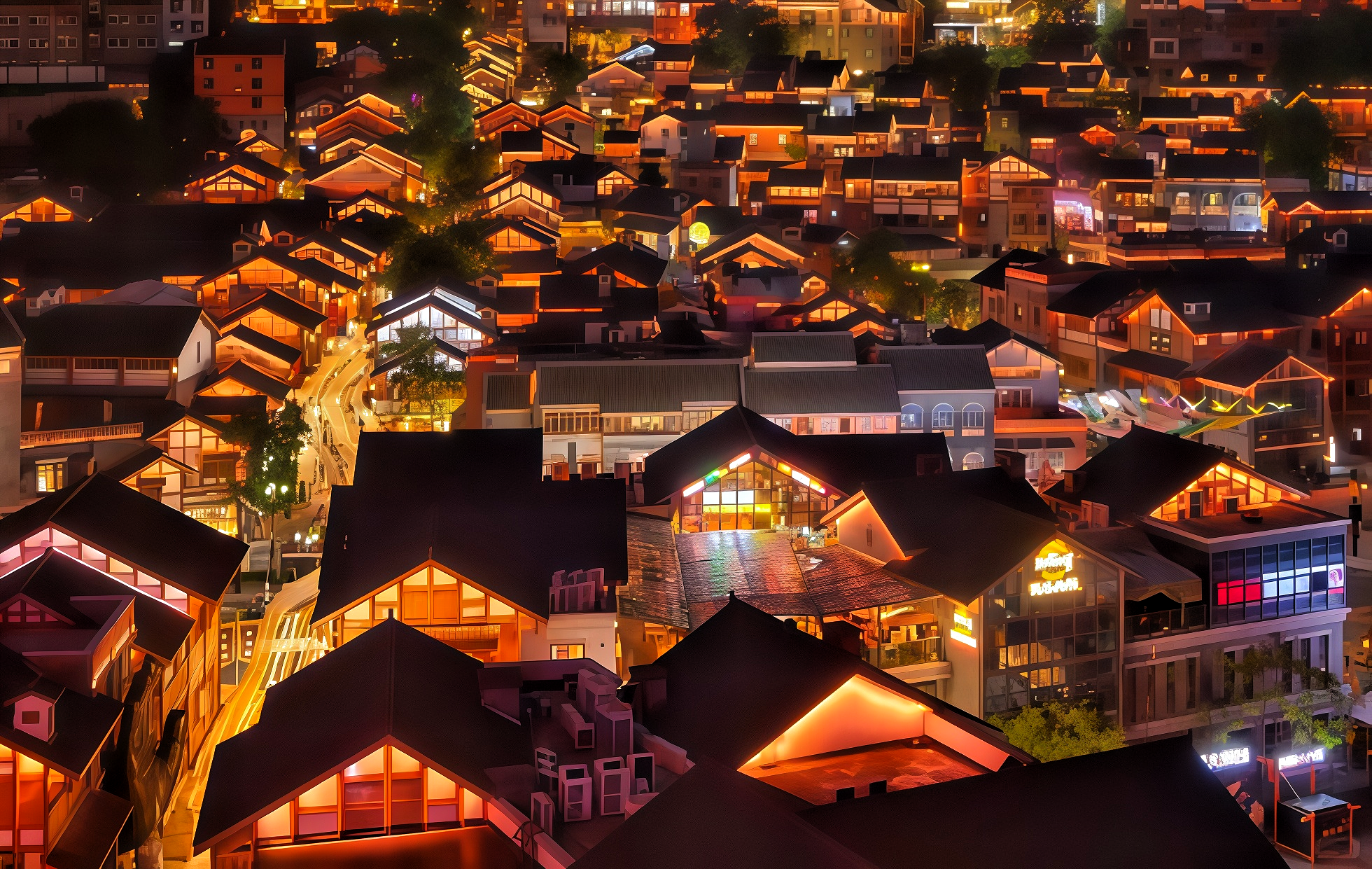
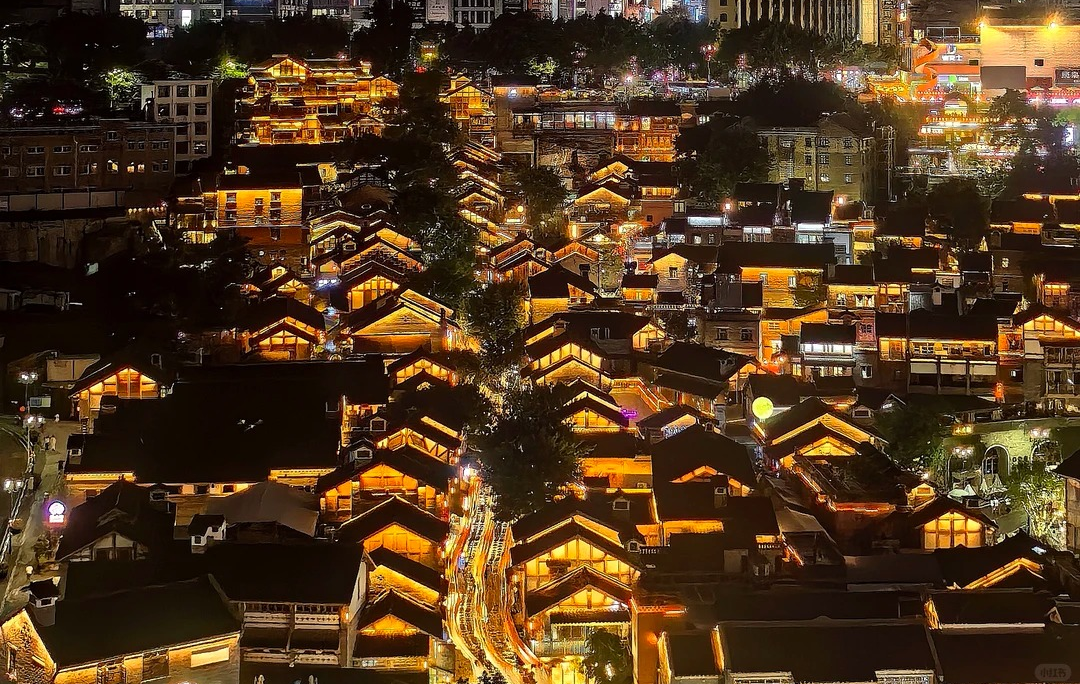
Shibati’s network of air-raid shelters stands as a silent witness to Chongqing’s history during the War of Resistance. The site of the "Shibati Grand Tunnel" was originally constructed in 1936; excavated to a depth of approximately 10 meters underground and extending horizontally for about two kilometers, it served as a vital component of Chongqing’s extensive tunnel system during the war era. Today, portions of the tunnel complex have been opened to the public; stepping inside, one is met with a penetrating coolness—a sensation that seems to evoke the echoes of those wartime years, when the defiant cry of "The more we are bombed, the stronger we become!" rang out through the city. At night, the cliffs, retaining walls, and banyan trees are meticulously outlined by decorative lighting; the "Night Lights of Shanguo" cast a warm halo upon the bluestone paving, creating a unique aesthetic of mountain-city illumination found nowhere else.
Humanistic Ingenuity: The Layered Tapestry of Bayu Life
The humanistic landscape of Shibati constitutes a Bayu epic—a narrative intricately woven from threads of architectural aesthetics, the vibrant bustle of daily street life, and the collective memory of the people.
Beyond Diaojiaolou and Jia Geng Style: A Living Specimen of Bayu Mountain Architecture
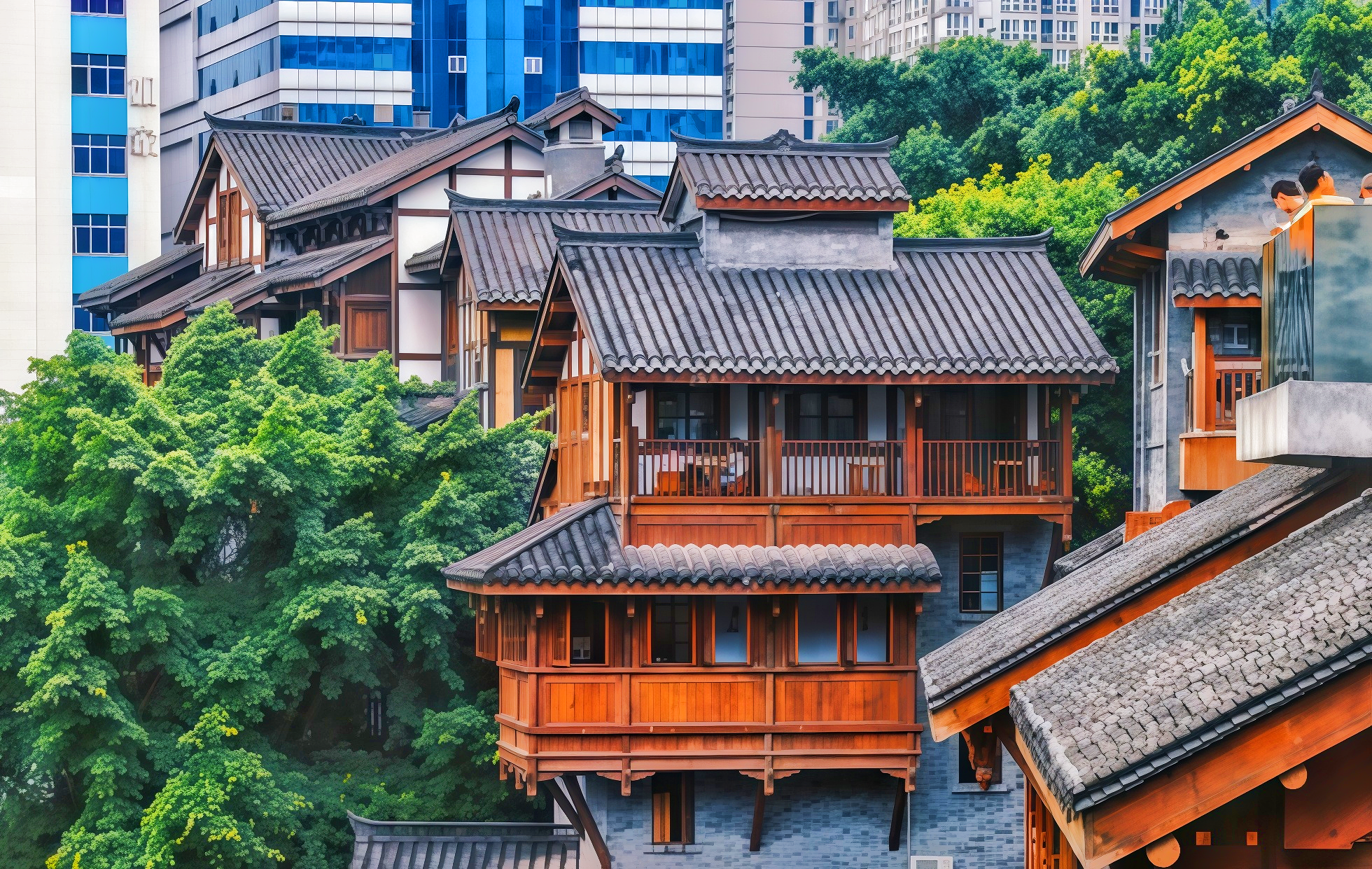
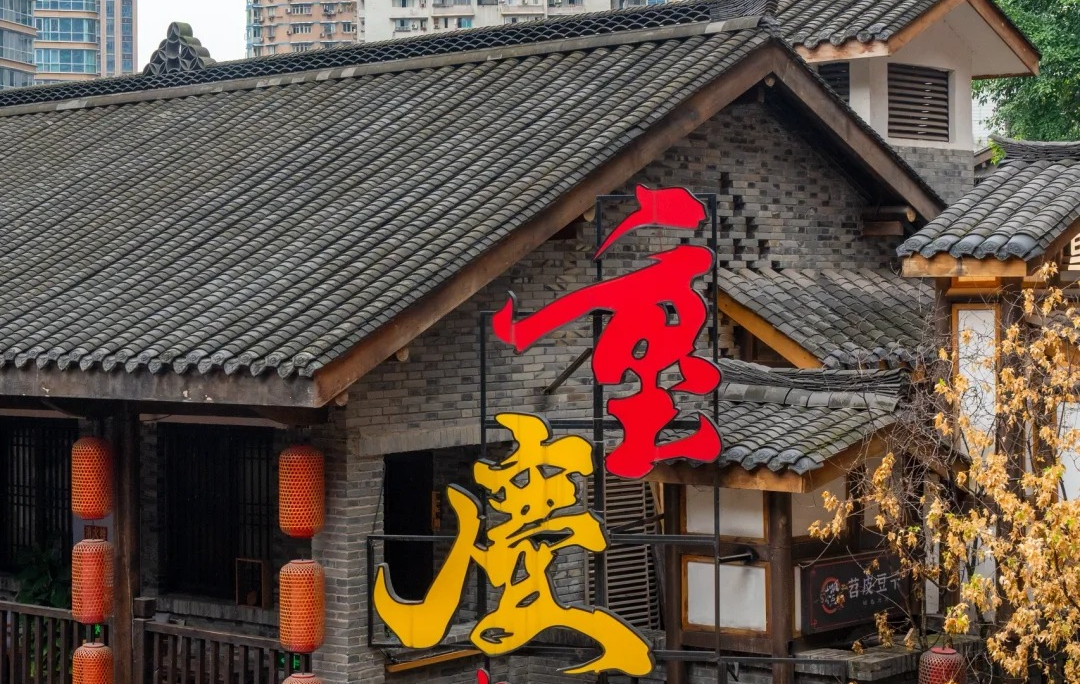
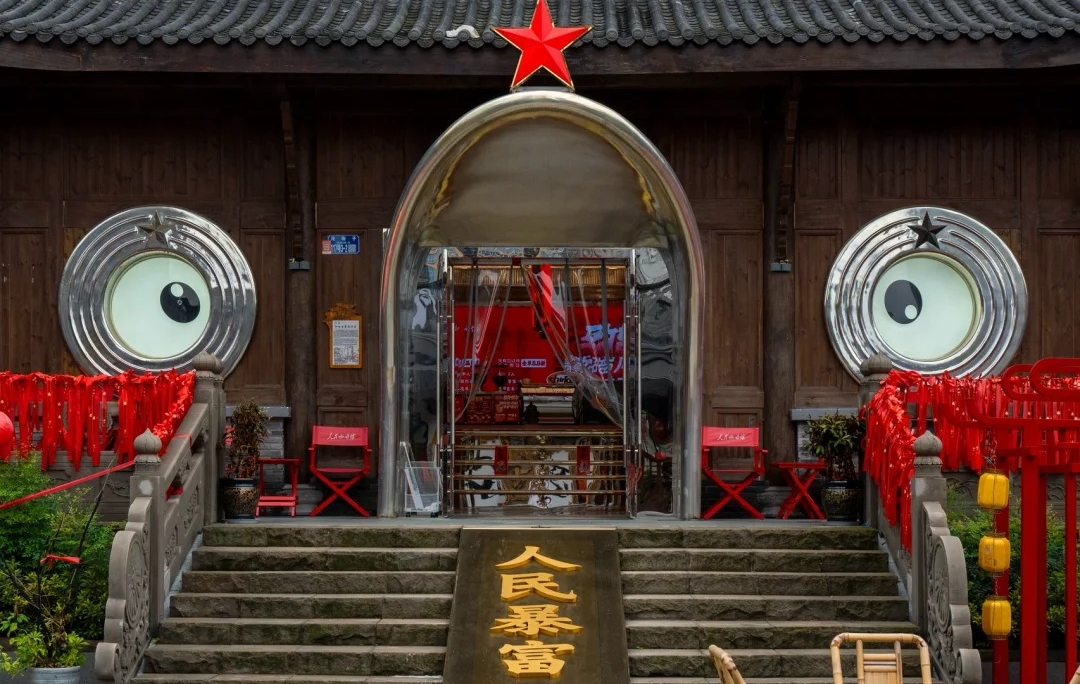
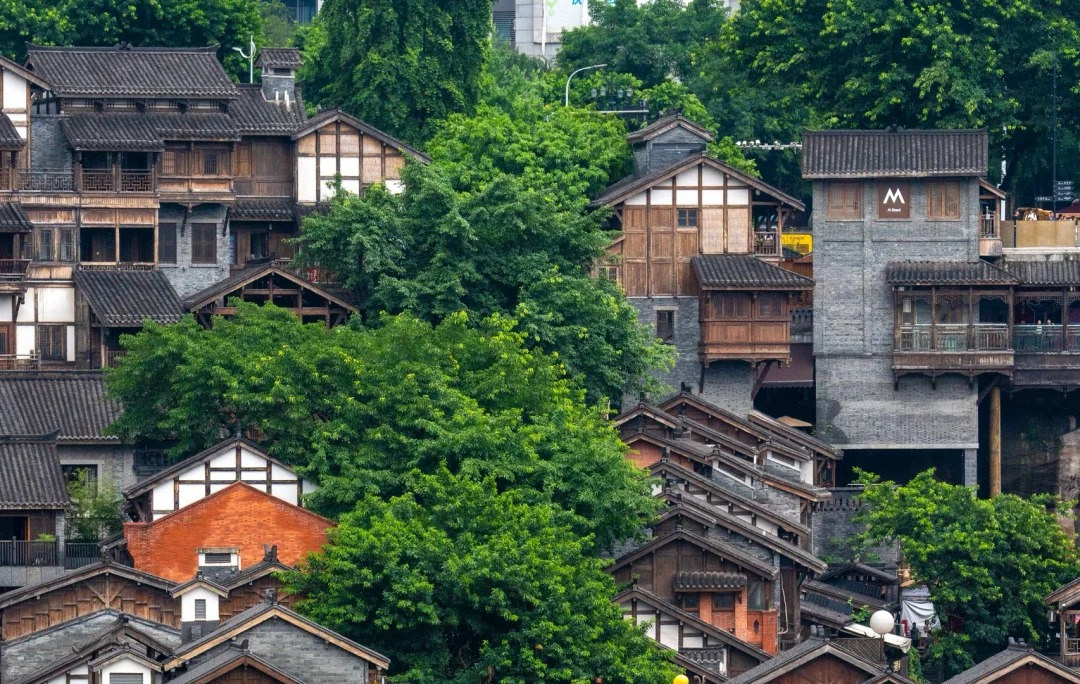
If the Jia Geng style architecture of Xiamen University is akin to "wearing a Western suit beneath a traditional bamboo hat," then the architecture of Shibati represents the ultimate expression of the maxim: "Mountain-city people building mountain-city homes using mountain-city methods." The designers conducted extensive research and gathered data on the construction methods of Chongqing’s residential buildings across different historical periods. They widely employed construction techniques unique to the Ba-Yu region—such as tiao (cantilevering), diao (suspending), kua (spanning), jia (framing), zuan (burrowing), and zhuan (turning)—while respecting and preserving the original topography, retaining walls, trees, and terraced steps. Under these premises, each building was given a personalized design and aesthetic expression. Walking through the area today, one encounters a blend of bamboo-woven walls, whitewashed walls, dressed-stone walls, and gan-da-lei (rammed earth) structures; Ming and Qing Dynasty styles coexist with European architectural elements, creating a rich, multi-layered atmosphere akin to an open-air museum of traditional mountain-city craftsmanship. Among these structures, the Zhu Bingren Art Museum (also known as the Yudanfeng Silver House) was designed around the motif of the phoenix. Its entrance features a uniquely sculpted dragon, while the interior houses a phoenix-themed "photo spot" wall—serving as a prime example of the dynamic collision between traditional craftsmanship and contemporary "Guochao" (national trend) aesthetics.
Filming Location for I Belonged to You: A Generational Youth Landmark
In 2016, the film I Belonged to You, directed by Zhang Yibai, transformed Shibati (Eighteen Steps) into an emotional landmark for a generation of young Chinese people. The alleys where the characters Mao Shibai and Lizhi chased and frolicked, as well as the scenes of old streets brimming with the authentic "smoke and fire" of daily life, were all filmed in Shibati—which was, at the time, undergoing renovation. Walking down the main staircase to the point where it meets the Shibati Water Well Plaza platform, one finds a single banyan tree and a utility pole; this spot served as the central filming location for the movie within the Shibati area.
The Great Tunnel Site: A City That Could Not Be Broken
From the evening of June 5, 1941, until late into the night, Japanese aircraft subjected Chongqing to a relentless, rotating bombardment lasting over five hours. Within a short span of time, tens of thousands of people flooded into the air-raid tunnels located in three specific sections: Shibati, Shihui City, and Yanwu Hall. The resulting oxygen depletion inside the tunnels triggered chaos and disorder; thousands of civilians perished or were injured due to asphyxiation and stampedes, culminating in the "June 5th" Great Tunnel Massacre—a tragedy that shocked the world. This national-level historical site of the War of Resistance has now been restored and opened to the public. Covering a floor area of approximately 455 square meters, the site has been designated a Chongqing Municipal Cultural Heritage Protection Unit, listed alongside the tunnel shelters at Ciqi Street and Shihui City in Yuzhong District. Stepping into the Exhibition Hall of the Ruins, one is met by bronze-hued bas-reliefs etched with faces contorted in pain, while clusters of white chrysanthemums serve as a poignant tribute to the sorrow of descendants—this stands as the most profound historical landmark for understanding the indomitable spirit of the Chongqing people: "the more we are bombed, the stronger we become."
The "Mountain City Memories" Museum and Intangible Cultural Heritage District
Shibati is home to various cultural exhibition spaces—such as the "Mountain City Memories" Museum and the "Shibati Memories" Museum—which systematically chronicle the evolution of this district over the span of eight centuries. Furthermore, as Chongqing’s only national-level tourism district dedicated to Intangible Cultural Heritage (ICH), the area gathers traditional workshops featuring crafts such as ancient oil-pressing techniques, handmade sugar production, and bamboo weaving, allowing visitors to witness the living legacy of these age-old trades firsthand. The entire district has been curated to feature the "Eighteen Scenic Spots"—a collection of 18 cultural and natural landmarks including the Mountain City Memories Museum, Sunset at the Buddha Cliff, Moonlight on the Banyan Tree, Panoramic Views from the Parade Ground, Spring Breeze at the Ancient Well, Night Lights at Shanguo Temple, and Tales of the Sedan-Chair Porters. These sites seamlessly blend historical narratives with the modern visitor experience.
> Photography Tips:
> The best vantage point for a panoramic shot is the "City Balcony" at the North Entrance, or through the windows of the 9th-floor corridor at the Shibazun Hotel. From these spots, you can frame a complete view of Shibati alongside the "Hello Chongqing" signage atop the WFC skyscraper.
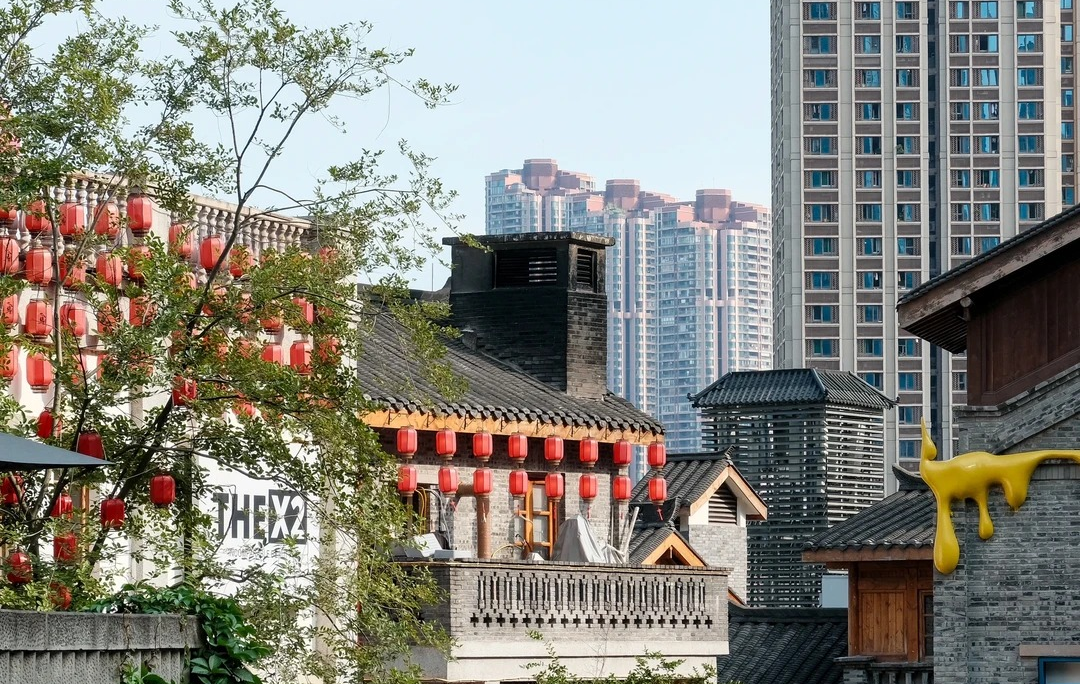
> The windows of the teahouse in Building A5 constitute the most classic "photo-op" spot. Shooting through the window lattices creates a magical contrast between the layers of grey-tiled rooftops in the foreground and the distant high-rises—evoking an atmosphere reminiscent of the animated film Spirited Away.
> The "Step-by-Step Lotus" staircase located near the Ancient Well Plaza offers an incredibly romantic atmosphere when illuminated by lights at night.
> The lantern-lined corridor at Phoenix Plaza is particularly photogenic after dark; the antique charm of the red lanterns paired with the grey flagstone paving creates a perfect tableau of traditional Chinese aesthetics.